Monday, December 17, 2012

Berkeley Winter Walking Poem

walking to Trader Joe's
cold legs
smell of Nation's
pot
and Indian food
mingle in the air
man standing too close to me at checkout
FUCK OFF
people driving too fast down residential streets
wonder if they will hit me
the smell of fires burning in fireplaces
I wish I had one at home
settle for a space heater
to warm up numb fingers
noses
and toes

Friday, December 07, 2012

Review: The People's Apocalypse


The People's Apocalypse
The People's Apocalypse by Ariel Gore and Jenny Forrester

My rating: 4.5 of 5 stars

This book is as highly varied as it sounds from the description, and it's as hard to sum up in a short review as it was difficult for me to put down! I was just eternally curious what the next short story or informational article would be.

The People's Apocalypse is divided into 7 section: Revelations, Plans, Signs, Visions, Cataclysms, Demons and Saviors and my favorite entries include the very practical "Preparedness 101," "You'll Need a Solar Oven," and "You Might Need Urban Goats," the heart-rending "Tsunami Warning," the inspirational "To Hell With Chicken Little," "Happy Endings," and "Revolution," the meditative and sad "The End Times Project" and "After the Very First Quiet Morning," and the musings on different possible outcomes of one event of "Biochemical Weapon Zombie Dog Dream: A Political Allegory."

Some of these pieces are quite explicitly political as well, with analyses ranging from environmentalist, radical people of color, class politics, religious politics and politics of place. Some pieces weave these elements in more subtly. But again, the strength is, I believe, in the variety of points of view, content and style.

One glaring critique for me: the indeed erotic "Erotalyptica" was also unfortunately very heteronormative and obliviously racist (relegating Mayan peoples to the past, as if they do not still exist). Were I an editor I would have certainly pointed the latter out and probably the former too, given the story's premise. Frankly, some queer relationships in the stories in general would have made the book even stronger, they just would have made particular sense included in that story.

All said and done I think this is a unique and totally worthwhile read.


View all my reviews

Tuesday, December 04, 2012

When Was the Last Time I Did a Round Up of Good Shit to Read?

I don't even know.  But as I was linkspamming the shit out of my Facebook friends (sorry y'all) I thought to myself that really I should be doing this here....  And it's going to be quite the clusterfuck of various areas of my interest and their recent discussion in media, so buckle up.  You're welcome!  :D


Cleveland anarchist bomb plot aided and abetted by the FBI
Rather than target real risks of domestic terror, like neo-Nazis, the FBI entrapment machine demonises anarchists and Muslims
A+ priorities and strategies FBI!  /sarcasm  This is one of the reasons why I am so burned out on anything professing to be "law and order" or "security" matters.  We're creating terrorists so we can catch them...instead of looking at ACTUAL TERRORIST GROUPS like neo-Nazis.  Oh, ok.


The homeless man and the NYPD cop's boots: how a warm tale turns cold
A picture that started as a seasonal heartwarmer has now become a reason not to feel sorry for the homeless as Hillman is painted as a wilful eccentric.
I was really struck by this story and what a great example it is of the demonization of the poor, the way that there is only one "proper" way to BE poor, and the way deviance from that narrative is SOUGHT OUT by people and then used to blame the poor for their situation and thus absolve all others of any complicity or guilt in the system that keeps them there.  I also think this overlaps with my final story....


In solidarity for the respect of Holy Places
In appreciation of the many gestures of solidarity from the Muslim world following the recent desecration of Christian Holy Places, the Auxiliary Bishop of Jerusalem, Bishop William Shomali, visited Al-Aqsa Mosque on Thursday, October 4 where he met Grand Mufti Mohammad Hussein and the grand magistrate of the mosque Abdel Adhim Salhab...The Bishop also assured Muslims the support of the Christian community with respect to their holy places.
People not being assholes.  I felt like I should mix it up a little bit.


Homefulness! A Real Solution to Houselessness
Homefulness, a project of POOR Magazine, is a solution of interdependence, love, and equity-sharing for landless youth, adults, and elders across Pachamama. It is a poor people-led, self-determined, truly green model for housing, art, microbusiness, spirituality, interdependence, self-accountability, caregiving, and community that incorporates the teaching of our elders, ancestors, and spiritual leaders in harmony with Mother Earth. We aim to create permanent and lasting solutions to houselessness for families in poverty who have been displaced, evicted, gentrified, and destabilized out of their indigenous lands and communities.
An IndieGoGo campaign that I would really encourage you to participate in, if you can!


Remember Their Names: In Memory of Kasandra, Cherica & Others
This tragic story pushes to the forefront an important issue in terms of domestic violence and murder. When the murderer is famous, attractive, rich, or charming people don’t want to believe that they are guilty. I don’t pretend to know Jovan Belcher’s heart, motives, or mind set when he fired numerous gunshots into the body of his baby’s mother, and then turned the gun on himself. I don’t know why his only option, in that moment, felt like a desperate one. I don’t know what caused him to murder Kasandra, but what I do know is that it was not Kasandra’s fault. I know that staying out until 1 o’clock in the morning at a concert was not an invitation to die. I know that it doesn’t matter what she wore that night, or what she may have said, or whether or not she may have been intoxicated, or rolled her eyes at him, or called him out of his name, or talked to another guy in passing, she didn’t deserve to die.

Nigeria: Security Forces Open Fire On Protesting Ogoni Community
Armed security forces protecting the interest of the Anglo-Dutch oil and gas major, Shell, on Friday, opened fire on a protesting Ogoni community in the Rivers State axis of Southern Nigeria. The community, Eleme, was protesting against the presence of some Shell officials at the Ebubu Oilfield.

U.S. finalizes $3.4 billion settlement with American Indians
The missing funds at the center of the class-action case involve what are called Individual Indian Money accounts, which are supposed to represent the property of individual Indians. The accounts are held by the United States as trustee.
The lawsuit had accused the government of failing to account for the money, failing to make proper payments, and converting tribal money for the government's own use.
In making the announcement Monday, Obama remembered Cobell for "her honorable work." In 2009, she said that many represented in the class-action lawsuit "subsist in the direst poverty," and that the settlement is "significantly less than the full amount to which the Indians are owed."
This one made me happy, sort of, and also really fucking angry and sad.


The Adoption of Johnny Depp

A video from the 1491s recounting and dramatizing the events of Johnny Depp's adoption by LaDonna Harris of the Comanche nation. Not to be missed.  I'm serious.  Watch this shit.


WUT DUZ TRNAS GENDERE MENA?@??!

An absolutely wonderful infographic on what "Trans" means!!!!!!!  <3


Jonathan Strange & Mr. Norrell Confirmed for BBC Miniseries

If you've read this book, you know why I'm excited!


Who's Afraid of the Qassams?
So stopping Palestinian rockets is not a plausible explanation for Israeli attacks. Indeed, the Israeli leadership – at best – does not care much about such deaths, posturing to the contrary. There’s a reason for that. The Zionist political and intellectual elite makes a lot of cantankerous noises about the rockets falling on southern Israel, usually accompanied by the question, how would you respond if rockets were falling on your head? But less frequently noted is whose heads those rockets are falling upon. Sderot and other southern cities are not merely populated by Jewish Israelis. They are also populated by mostly Mizrahi, usually lower-class, Jewish Israelis, the outcome of a planning regime which puts some populations of Jews in some places and kept other populations of Jews in others. 
Sderot, summoned up so sedulously as the very symbol of Israeli terror and fear due to Hamas’s – mostly ineffectual – rockets was initially a transit camp for Kurdish and Persian Jews. Later, it was populated by Moroccans. And still later, Ethiopians and the darker Jews of the ex-Soviet Caucasus. That was where they were dumped, with the European elites concerned, according to a 1950 Jewish Agency brochure, that the darker Jews might create “quarters of poverty, filth, unemployment, and crime.” Accordingly, there needed to be “a greater effort to settle the immigrants in the countryside.” And so they were. 
[...]And so Tel Aviv, the cosmopolitan, Ashkenazi, cultural core of Israel could remain distant from the front lines of the conflict created by the policies pursued by its economic and political elites, while the cannon fodder on the Israeli periphery would bear their brunt.
So, yeah.  Let's keep this in mind when we're talking about rockets and "retaliation," yeah?


Finally, 'Squatters are not home stealers'
What the squatting dispute boils down to is a split between those who consider private property to be sacred, and those who would prioritise the right to shelter. Few people would happily forfeit a second home to squatters, but nor does it feel morally justifiable for a nation to have an estimated 930,000 empty homes while people sleep on the streets.

This is a really interesting article recounting the situation primarily for squatters in the UK, where a measure (section 144) was recently passed criminalizing them in new if not unprecedented ways, as well as in several other European countries and the United States.

The part I've highlighted here is, for me, one of the common denominators in all of these debates: private property and profit versus the right to shelter and measurements of worth outside of capitalist profit.

Even as I plan to buy a house one day and thus participate more directly than I currently do in the system of private property/profit (through equity), I really think we as communities need to THINK ABOUT what private property means to us, its "sacredness," its use for profit, and our priorities around use of space.  Because it's simply not a question of IF we have an excess of buildings - WE DO - and if people are going to put them to use as homes, gardens, community spaces; isn't that a GOOD THING?

I think it is. And I don't think everything needs to be about PROFIT, or that the use of space is only "good" if PROFIT is made.  But that's the way all this is constructed and POLICED right now.....

This is just one of those things I don't think many people know about, much less question. It's something I didn't know about or question until it was put in my face with the response to building "occupations" over the last couple of years.  So here I am...writing about it.

Sunday, December 02, 2012

Cloud Atlas: Racebending, Genderbending and a Film for Us

Before going to see Cloud Atlas, I knew I few things about it.  I'd seen the trailers, and could see its scope was epic.  From the trailers I also knew it was a film by the Wachowskis, whose movies I generally FUCKING LOVE.  I knew it had been a book.  I knew it practiced racebending (actors of one race made up to look like people of another race/characters of one race played by actors of another).  And I had read two reviews, one referenced and linked to in the other: Cloud Atlas is a Film For Us - It is Our Film, in which the author argues, in part;
This won’t make much sense to a lot of people, but Cloud Atlas is Our Film. And there isn't a trans person in the film. But truly, this is a movie that is as rich and complex and deeply moving as the lives of Trans people, and it carries forward with so many themes that it resonates soundly with transness in a way that it id challenging to describe (sic).

It is a movie for those who love, and for those who are loved. It is a film for those who struggle, who wonder, who hope.
As I was watching the film myself, I couldn't help but agree with this review.

Her words kept ringing in my ears.

But I don't want to start there.  I want to start with what made me profoundly uncomfortable about the movie: the racebending.  Quite frankly, the white men made up to look Asian looked more like Vulcans or Romulans than actual Asian people of any ethnicity.  Like, the makeup people really tried, but it just DIDN'T work.  It was SO distracting.  It was SO awkward.

Similar feelings were conjured when Doona Bae was made up to be white and then a darker Latina, although this was more successful.

Halle Berry I didn't actually even recognize when she was made up as a white woman.

There is a LOT in here about my own perceptions, the perceptions of the other people in the theater, about "passing," about Otherness, and about mixed race features and "beauty" that are beyond the scope of this review (like I'm wishing I was back in school cuz I just keep coming across more things that are so fucking worth analyzing and talking about that I just want to write a huge research paper or something, but I don't want to do all of that right here and now)...

But whether the makeup "worked" or didn't, isn't really the point and isn't what ultimately bothered me about watching white men play at being Asian.  What bothered me was thinking about all the Asian men who could have played these roles, and who ultimately weren't in the movie because of the choice to racebend white men into the roles instead.

At the same time, I do understand the choice to have the same actors portraying many different characters.  I mean, without going into heavy spoilers, this is a lot of what the movie is about.  And not in some white-washed liberal colorblind way (even if in the end whitewashing did occur) but more in the sense of the idea that our souls have been/will be tied into bodies that are different from the ones we have now, and to represent that, they chose to use the same actors, so we can identify these souls visually as they move from body to body throughout time.  From a visual storytelling perspective, this strategy makes sense, and as I said to one of my friends as we discussed our reactions, this is basically the ONLY scenario I can even entertain the idea of racebending of this nature being remotely appropriate/excusable.  It's also a very theatrical choice, as my husband pointed out, which given the Wachowski's grand style of film-making, is also rather appropriate.

That said, I can think of other ways they could have achieved this.  There is a running visual element throughout the film of a distinctive birthmark.  Put that birthmark on anyone, and we could know it was this character reincarnated.  You could then have multiple actors play that role (which they did) and we know to trace them all together.  Obviously the actors, Halle Berry, Hugo Weaving and especially Tom Hanks in particular would have had considerably less fun and demonstrated far fewer of their acting ability in that case, but many more actors, and importantly, many more actors of color, would have had the opportunity to demonstrate THEIR skills instead, and it would not have reinforced Hollywood narratives of the erasure of actors of color and current social narratives of whitewashing.

Note I do not say here "colorblind" narratives, because I absolutely did not take that message away from the film.  The message of the film, in the way it takes us through so many various lives, and shows us their interconnections, is one that does not shy away from difference, nor try to argue we are "all the same;" but that we are connected, that we are not totally separate from each other.  This was one of the messages that I thought was brilliantly done and beautiful to behold.

So yes.  This practice of yellowface made me deeply uncomfortable.  Even as I think it attempted to challenge the idea of the Racial Other, I also think it didn't really succeed.  And that is where I wanted to start my discussion of the film, because it deserves to be put front and center.

Existing alongside this really fucking important discomfort is the fact that I loved this film.  So I cannot over-emphasize my ambivalence here.  What they tried to portray with it was just epic.  There are quotes from the film I want to put in here, and I regret not taking notes as I watched, but I return now to the idea that "this film is for us."  I'm not trans, but I kept thinking about that review at different points in the movie, because, YES.  As someone who has long felt that the status quo/normative culture is one I am forcefully alienated from, YES.  The complexities, and beauties, and tragedies of life, hope and betrayal and greed and love are all in this story instead of some easily digested fantasy, and what ultimately comes out of it all is the need for us to stand up for each other.  To risk that.  To risk telling our truths.  To risk suffering and dying for each other.  That "boundaries are conventions," and conventions must be challenged, pushed at, broken through.

In other words:

REVOLUTION.


Revolution so that we all can survive and REALLY FUCKING LIVE.  In all our difference and splendour and variation and BEAUTY.  And even in our imperfection, making some of the imperfect choices made in its creation perhaps even sort of appropriate.

This movie is so QUEER that it doesn't surprise me that not everyone is "getting" it,* as attested to by the fact that it hasn't been a box office "success," apparently, and that I've heard/read so many saying they were confused by it.  But I don't know.  With all its flaws, it spoke very clearly to me.

And this was why the genderbending didn't make me uncomfortable like the racebending did.  Yes, Hugo Weaving still basically looked like Hugo Weaving, but he didn't play that character as a caricature.  More than that, I was fascinated by this choice of genderbending, given that this is the first movie (IIRC) after Lana Wachowski's transition, the first film she released as Lana publicly.  And in it she chooses a man who has been in like, all but one of the Wachowski's movies, to play a woman.  To play a butch, masculine woman.  Maybe, to play a trans woman.

In fact this is perhaps one of the most stereotypical ways that Hollywood presents trans women, one of the ways it displays it's transmisogyny** and undermines trans feminine identification.  That REALLY, they are not women at all, but "men in dresses."

It would be easy to read this character in that light, and it can't be ignored that this character exists within a movie-making context that is openly hostile to trans people, one that does undermine the perceived validity of trans identification in this manner.  And yet, in her first movie created openly as Lana, she chooses this man, clearly like their favorite actor ever and I'm guessing close friend, to portray this character.  And he does so really, really well.  Nurse Noakes is not played for laughs (although I did hear some VERY uncomfortable and surprised laughter when she first came on screen), and her femininity is not played to a hyper/false-feminine "drag queen" stereotype.  Weaving does affect his voice to make it higher, and this isn't done flawlessly, but it also isn't done hyperbolically.  So to me, this read as a great moment of trust on Lana Wachowski's part.  Of wanting to put characters on screen that don't conform to cisnormativity even as she had to know the hostile environment she would be adding that character to.  And so she chose to person close to her to portray that character, and tried to navigate a razor thin line between challenging the normative and falling into its traps.

It worked for me.

Let me also not ignore here that Weaving was not the only actor to genderbend in this film.  At least one of the woman actors (Xun Zhou, I believe) portrayed a man.  However, this character didn't have as big of a role as Weaving's nurse, and was not as apparently genderbent.  In fact, it wasn't until the end of the movie that I realized she had played that character at all.  And part of my brain screams about what this says about the way in which Asian men are portrayed/perceived as feminine, that this perception arising out of white supremacy's influence on normative gender means it is the Asian actors who have more gender mobility when swapping parts.  It is playing along that edge again, of challenging normativity, and sort of playing with normative perceptions too?  Perhaps in that legacy of Disidentification.  I'm not sure.  I probably won't be sure until I've seen this several more times, but I don't want to ignore any of the inklings of critique bubbling their way to the surface of my mind.

If you have gotten this far, I'm going to guess you've figured out this is a complicated and multi-layered film.  It is.  It is also at times a beautiful film.  Maybe even a transcendent film (a word I don't use lightly as I find it horribly cheesy and pretentious usually).  I do hope you will see it.

It is a film for us.


Footnotes:
*and by that I do not mean "have a problem with any of the totally critique-able parts" but the frequently heard "I have no idea what this movie is about"
**versus "merely" its cissexism in pursuit of "validation" of trans feminine identity through their portrayal by cis woman actors


Addendum:
As for Time relegating this to "the worst movie of the year" all I can say is LOLZ.

Thursday, November 22, 2012

A Day of Thanksgiving: Challenging Colonialist Myth

Thanksgiving in the United States is wrapped in colonialist/nationalist myth that most of us learn from pre-school/day care and on.  I don't think most of us are ever taught the realities of "Thanksgiving;" why the holiday exists, what cultural narratives it perpetuates, what present realities it obscures.  In an annual effort to challenge the fucked up colonial underpinnings of this holiday, I give you the debunking of myths most of us probably learned growing up.


Myth #1: “The First Thanksgiving” occurred in 1621.

Fact: No one knows when the “first” thanksgiving occurred. People have been giving thanks for as long as people have existed. Indigenous nations all over the world have celebrations of the harvest that come from very old traditions; for Native peoples, thanksgiving comes not once a year, but every day, for all the gifts of life. To refer to the harvest feast of 1621 as “The First Thanksgiving” disappears Indian peoples in the eyes of non-Native children.


Myth #2: The people who came across the ocean on the Mayflower were called Pilgrims.

Fact: The Plimoth settlers did not refer to themselves as “Pilgrims.” Pilgrims are people who travel for religious reasons, such as Muslims who make a pilgrimage to Mecca. Most of those who arrived here from England were religious dissidents who had broken away from the Church of England. They called themselves “Saints”; others called them “Separatists.” Some of the settlers were “Puritans,” dissidents but not separatists who wanted to “purify” the Church. It wasn’t until around the time of the American Revolution that the name “Pilgrims” came to be associated with the Plimoth settlers, and the “Pilgrims” became the symbol of American morality and Christian faith, fortitude, and family.


Myth #3: The colonists came seeking freedom of religion in a new land.

Fact: The colonists were not just innocent refugees from religious persecution. By 1620, hundreds of Native people had already been to England and back, most as captives; so the Plimoth colonists knew full well that the land they were settling on was inhabited. Nevertheless, their belief system taught them that any land that was “unimproved” was “wild” and theirs for the taking; that the people who lived there were roving heathens with no right to the land. Both the Separatists and Puritans were rigid fundamentalists who came here fully intending to take the land away from its Native inhabitants and establish a new nation, their “Holy Kingdom.” The Plimoth colonists were never concerned with “freedom of religion” for anyone but themselves.


Myth #4: When the “Pilgrims” landed, they first stepped foot on “Plymouth Rock.”

Fact: When the colonists landed, they sought out a sandy inlet in which to beach the little shallop that carried them from the Mayflower to the mainland. This shallop would have been smashed to smithereens had they docked at a rock, especially a Rock. Although the Plimoth settlers built their homes just up the hill from the Rock, William Bradford in Mourt’s Relation: A Journal of the Pilgrims at Plymouth, does not even mention the Rock; writing only that they “unshipped our shallop and drew her on land.” The actual “rock” is a slab of Dedham granodiorite placed there by a receding glacier some 20,000 years ago. It was first referred to in a town surveying record in 1715, almost 100 years after the landing. Since then, the Rock has been moved, cracked in two, pasted together, carved up, chipped apart by tourists, cracked again, and now rests as a memorial to something that never happened.

It’s quite possible that the myth about the “Pilgrims” landing on a “Rock” originated as a reference to the New Testament of the Christian bible, in which Jesus says to Peter, “And I say also unto thee, Thou art Peter, and upon this rock I will build my Church and the Gates of Hell shall not prevail against it.” (Matthew 16:18) The appeal to these scriptures gives credence to the sanctity of colonization and the divine destiny of the dominant culture. Although the colonists were not dominant then, they behaved as though they were.


Myth #5: The Pilgrims found corn.

Fact: Just a few days after landing, a party of about 16 settlers led by Captain Myles Standish followed a Nauset trail and came upon an iron kettle and a cache of Indian corn buried in the sand. They made off with the corn and returned a few days later with reinforcements. This larger group “found” a larger store of corn, about ten bushels, and took it. They also “found” several graves, and, according to Mourt’s Relation, “brought sundry of the prettiest things away” from a child’s grave and then covered up the corpse. They also “found” two Indian dwellings and “some of the best things we took away with us.”  There is no record that restitution was ever made for the stolen corn, and the Wampanoag did not soon forget the colonists’ ransacking of Indian graves.


Myth #6: Samoset appeared out of nowhere, and along with Squanto became friends with the Pilgrims. Squanto helped the Pilgrims survive and joined them at “The First Thanksgiving.”

Fact: Samoset, an eastern Abenaki chief, was the first to contact the Plimoth colonists. He was investigating the settlement to gather information and report to Massasoit, the head sachem in the Wampanoag territory. In his hand, Samoset carried two arrows: one blunt and one pointed. The question to the settlers was: are you friend or foe? Samoset brought Tisquantum (Squanto), one of the few survivors of the original Wampanoag village of Pawtuxet, to meet the English and keep an eye on them. Tisquantum had been taken captive by English captains several years earlier, and both he and Samoset spoke English. Tisquantum agreed to live among the colonists and serve as a translator. Massasoit also sent Hobbamock and his family to live near the colony to keep an eye on the settlement and also to watch Tisquantum, whom Massasoit did not trust. The Wampanoag oral tradition says that Massasoit ordered Tisquantum killed after he tried to stir up the English against the Wampanoag. Massasoit himself lost face after his years of dealing with the English only led to warfare and land grabs. Tisquantum is viewed by Wampanoag people as a traitor, for his scheming against other Native people for his own gain. Massasoit is viewed as a wise and generous leader whose affection for the English may have led him to be too tolerant of their ways.


Myth #7: The Pilgrims invited the Indians to celebrate the First Thanksgiving.

Fact: According to oral accounts from the Wampanoag people, when the Native people nearby first heard the gunshots of the hunting colonists, they thought that the colonists were preparing for war and that Massasoit needed to be informed. When Massasoit showed up with 90 men and no women or children, it can be assumed that he was being cautious. When he saw there was a party going on, his men then went out and brought back five deer and lots of turkeys.

In addition, both the Wampanoag and the English settlers were long familiar with harvest celebrations. Long before the Europeans set foot on these shores, Native peoples gave thanks every day for all the gifts of life, and held thanksgiving celebrations and giveaways at certain times of the year. The Europeans also had days of thanksgiving, marked by religious services. So the coming together of two peoples to share food and company was not entirely a foreign thing for either. But the visit that by all accounts lasted three days was most likely one of a series of political meetings to discuss and secure a military alliance. Neither side totally trusted the other: The Europeans considered the Wampanoag soulless heathens and instruments of the devil, and the Wampanoag had seen the Europeans steal their seed corn and rob their graves. In any event, neither the Wampanoag nor the Europeans referred to this feast/meeting as “Thanksgiving.” 


Myth #8: The Pilgrims provided the food for their Indian friends.

Fact: It is known that when Massasoit showed up with 90 men and saw there was a party going on, they then went out and brought back five deer and lots of turkeys. Though the details of this event have become clouded in secular mythology, judging by the inability of the settlers to provide for themselves at this time and Edward Winslow’s letter of 1622, it is most likely that Massasoit and his people provided most of the food for this “historic” meal.


Myth #9: The Pilgrims and Indians feasted on turkey, potatoes, berries, cranberry sauce, pumpkin pie, and popcorn.

Fact: Both written and oral evidence show that what was actually consumed at the harvest festival in 1621 included venison (since Massasoit and his people brought five deer), wild fowl, and quite possibly nasaump—dried corn pounded and boiled into a thick porridge, and pompion—cooked, mashed pumpkin. Among the other food that would have been available, fresh fruits such as plums, grapes, berries and melons would have been out of season. It would have been too cold to dig for clams or fish for eels or small fish. There were no boats to fish for lobsters in rough water that was about 60 fathoms deep. There was not enough of the barley crop to make a batch of beer, nor was there a wheat crop. Potatoes and sweet potatoes didn’t get from the south up to New England until the 18th century, nor did sweet corn. Cranberries would have been too tart to eat without sugar to sweeten them, and that’s probably why they wouldn’t have had pumpkin pie, either. Since the corn of the time could not be successfully popped, there was no popcorn.


Myth #10: The Pilgrims and Indians became great friends.

Fact: A mere generation later, the balance of power had shifted so enormously and the theft of land by the European settlers had become so egregious that the Wampanoag were forced into battle. In 1637, English soldiers massacred some 700 Pequot men, women and children at Mystic Fort, burning many of them alive in their homes and shooting those who fled. The colony of Connecticut and Massachusetts Bay Colony observed a day of thanksgiving commemorating the massacre. By 1675, there were some 50,000 colonists in the place they had named “New England.” That year, Metacom, a son of Massasoit, one of the first whose generosity had saved the lives of the starving settlers, led a rebellion against them. By the end of the conflict known as “King Philip’s War,” most of the Indian peoples of the Northeast region had been either completely wiped out, sold into slavery, or had fled for safety into Canada. Shortly after Metacom’s death, Plimoth Colony declared a day of thanksgiving for the English victory over the Indians.


Myth #11: Thanksgiving is a happy time.

Fact: For many Indian people, “Thanksgiving” is a time of mourning, of remembering how a gift of generosity was rewarded by theft of land and seed corn, extermination of many from disease and gun, and near total destruction of many more from forced assimilation. As currently celebrated in this country, “Thanksgiving” is a bitter reminder of 500 years of betrayal returned for friendship.


Source

Wednesday, November 21, 2012

On Gaza

Watching Israel's latest bombing of Gaza has been heart breaking.

Watching friends and former friends of mine defend it has been sometimes worse.

But, I refuse to be silent, because I think genocide must be opposed under all circumstances.

Even when the victims of genocide aren't "perfect victims," even when their elected governments do things I also think are wrong, like send rockets into populated areas.

As a Jewish Anti-Zionist friend of mine said as we sat lesson planning over dinner, when we both wanted to be out in the streets instead: "yes, rockets are REAL," the VIOLENCE of them is real and that cannot be ignored or minimized... But, without dismissing their violence, let's also recognize that this violence has cost very few people their lives.  Let us also acknowledge that the lives lost to them (as this same friend pointed out) are largely those of the marginalized classes of Israeli society: the poor, the Mizrahi.  That Israel pushes these people outwards as a buffer for its more valued citizens against this violence, as have so many militarized/colonialist societies before them.

And this kind of exploitation and violence practiced on less valued human beings (on both sides of the border) is why (I think) groups like Gaza Youth Breaks Out have said not only "fuck Israel" but "fuck Hamas."  And it is with such groups that I align myself as well.

So yes, the rocket attacks need to end, this bombing has to end, the occupation needs to end.  A free Palestine must emerge.  And I have faith that it will.  I pray that it will.  I pray to the Mother that we will not continue to ignore the genocide of the Palestinian people, as so many other genocides have been and continue to be practiced and validated by governments around the world (including the US...which you'll hear more about in my Thanksgiving post!).

Free Palestine!  Decolonize Everything!

Tuesday, November 20, 2012

Transgender Day of Remembrance


Today is the Transgender Day of Remembrance. A time set aside to acknowledge/mourn those we have lost because their bodies and lives as trans people are still so hated in our societies.

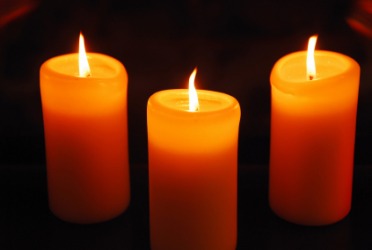
Light a candle, say a prayer, take a moment of silence, whatever it is you do.

And don't forget.


The names of those we have lost this year can be read here:  http://www.transgenderdor.org/memorializing-2012


Brandy Martell
Location: Oakland, California
Cause of Death: Gunshot
Date of Death: April 29th, 2012
Brandy was 37 years old.
Rest in Peace.
Rest in Power.


Saturday, November 03, 2012

Musings: on black bloc and property destruction and violence


This is something I've been thinking about and trying to figure out for a while.  I'm also extremely nervous posting about it, for a lot of reasons, but I am interested in your thoughts so please feel free to respond (as always I reserve the right to moderate your comment if you just act like a jerk).


So I've finally put together why property destruction in demonstrations coupled with black bloc bothers me so much on a personal/emotional/psychic level.

I'm constantly afraid that destructiveness is going to turn on me.  

It's related to the feeling I get when cat-called or when someone I'm arguing with starts to take that anger out physically (hit a wall, etc.) - that as a woman I am NOT safe in this situation.  That I am a target of this aggressive behavior.  

And not just generally as a woman but also individually as someone whose experiences with violent/hypermasculine behavior has been in the context of people wielding power over me; whether teachers, cops or bullies.  Without knowing/trusting the people in the bloc and fully understanding/knowing beforehand what property they are destroying and why, I experience those moments as an unleashing of destructive feeling/emotion/impulse that I KNOW can turn on me and people like me and people not like me but who are also targeted by hatred/violence/aggressive/hypermasculine/-phobic behavior.

As someone who knows intimately the catharsis of slamming a door or punching a wall, as someone who knows well the symbolic power of smashing/burning/destroying something, it's not the theory of the tactic I really have a problem with, but with the experience of it that I've had over the last year in marches, with people I don't know suddenly performing acts around me that I experience as violence (and the looming police threat around us only magnifies that feeling, at times when they haven't been around I have been noticeably less frightened by these actions).  

Black bloc contributes to this because the masks don't just prevent surveillance by cops but by our ability to see each other.  Most of the time, I don't know if I know these people, much less if I trust them.  And I'm just not naive enough to trust on faith that if they're there in this march with me it actually means we're on the "same side."  

I also don't think I'm the only one having a reaction like this in these crowds, which may contribute to why some others also label these actions "violent."  

And PLEASE don't misconstrue this: on a theoretical and even practical level I don't have any problem with BofA having its windows smashed, they and all others like them have practiced violence on many communities, and the cathartic and symbolic power and the message of those smashed windows is, in my view, potentially really valuable.  

But I would also say that I don't think my reaction to these situations is just "a personal problem" or something like that, and that the way I, and others who have experienced destructive impulses/actions that target us, should be taken into account when these things are planned.  Obviously sometimes the smashing of a window is spontaneous and there is only so much you can do about spontaneous actions, but sometimes it's not.  And in those times shouldn't we know and consent to being in this situation BEFORE it starts happening all around us and we're caught in the middle?  If we are all comrades, aren't those of us for whom that might be triggering owed some sort of warning?  

Or do we just deal with it, or not show up?  Because not showing up is almost where I'm at with anti-capitalist marches because of these experiences, and that sucks, because I am anti-capitalist.  

Obviously, it's quite fashionable right now to hate on black bloc* and property destruction, particularly here in the Bay where those tactics have led to some pretty damned divisive conversations...and I don't really want to add to that? (Which is why I've sat on this piece for weeks, actually).  But once I FINALLY figured this out, I also really, really, wanted to write it out and share it and maybe get others thinking about it too, because it seemed important.


*Obviously not all black blocs practice property destruction and not all property destruction is done by a black bloc, this is simply the context in which I have experienced these moments.  The exception being the black bloc on Move-In Day for Occupy Oakland, which I found really inspiring because they took a really awesome militantly defensive tactic of having shields and protecting people by standing between them and the cops and serving as a kind of wall so medics could get to injured people more easily, etc.  That was great.  I would love to see more of that.

Friday, November 02, 2012

Dia de los Muertos


Dia de los Muertos. 
Samhain.
All Souls Day.

So much love to the Ancestors. 

So much love to those I have known who reside on the other side of the Veil. 
I miss you on a regular basis. 

I hope I make you proud.
And thank you for your guidance.