Tuesday, June 28, 2011
Thursday, June 23, 2011
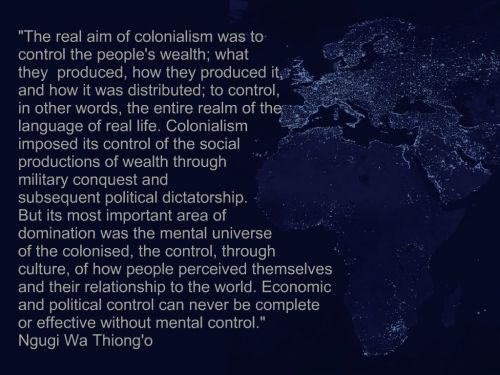
The Old Will Die and the Young Will Forget: Zionist Discourses and State-building in Israel/Palestine
Another installment of "What has whatsername been working on in school?"[1]
_
“I pray that all [readers of this book] may unite in the resolve that
evil forces will never again be permitted to set one people against another”
– Alicia Appleman-Jurman[2]
The first time I remember coming
across the name “Palestine” was in a Holocaust memoir by Alicia Appleman-Jurman
called Alicia: My Story. I was probably thirteen years old. Although the facts of this remembering are
highly suspect at this point, the truth of it as a personal historical moment
was formative in my developing political consciousness and thus cannot be
dismissed out of hand. As I remember it,
Alicia hears from a fellow Holocaust survivor that European Jews have started
congregating in Palestine as a safe haven after the Holocaust and Russian pogroms.
Palestine is presented as the ancient site of the Jewish homeland (Eretz
Yisrael) and as safely out of the reach of genocidal and antisemitic
Europe. At the time, and after having
just read in detail how horrible the Holocaust was, this information made sense
to me and I recall feeling happy that the people of Palestine were willing to
accept this influx of immigrants with something like open arms, something that
Europe apparently was incapable of.
As the years went by I remember
hearing about the “troubles” in Israel and being puzzled by them. When did this area go from a safe haven to a
place where one could not go grocery shopping without fear of a suicide bomber
(or so the narratives in the United States media went)? Of course, what I never thought to ask myself
was: “When did Palestine become Israel?” Naively, I suppose I assumed that such a
transition would have been for the common good, as Jewish people had settled
there as a safe haven. Surely these
settlers wouldn’t treat those already living in the area the way the United
States had treated its indigenous population.
But slowly, bits and pieces of information incongruous to my
understanding of Palestine/Israel as a welcoming safe haven for post-Holocaust
Jews began to trouble me. Finally, well over a decade after my initial exposure
to that formative personal narrative I read another memoir, In Search of Fatima by Ghada Karmi. Just a child in 1948, Ghada and her family
escaped Palestine for England just before Israel’s declaration of
Independence.
What intrigued me most about this
second text was the recounting of the author’s childhood up to this point of
exodus. The question I should have asked
all those years ago began to be answered as I read of the waves of immigration
and resistance to them, of the terrorism perpetuated against Arabs as well as
Jews and ultimately the British abandonment of the region in an “inexcusably
abrupt and reckless fashion” (Shlaim 50)
and resulting war between Arab and Jew (such as it was presented in the memoir).
The connection between these two narratives, one of a Zionist immigrant
and another of a Palestinian, both just, or little more than, girls in that
same time and place, will forever be intertwined in my memory as the tragedy
and promise of Palestine/Israel. I begin
with this recounting as it is important to understanding my stakes and
investment in this project.
In keeping with that aim, I must
admit that while my knowledge regarding Israel/Palestine has deepened in the
months spent working on this current project, I continually feel the immensity
of what I still do not know. Knowledge
gleaned from one source will be hotly contested by another, where both seem to
be intellectually honest, academically rigorous and personally sincere; thus confounding
most aims to finding “the truth” of the facts on the ground. This caveat is important to understanding
this project because it must be clear that this essay is not comprehensive; the
scope is limited. In particular, my
interest solidified around the question of Arab expulsion from the areas which
would become the present-day state of Israel.
I have become fascinated by the recurring rhetoric regarding this
expulsion; particularly the discourse around the nakba (catastrophe), otherwise known as Israel’s declaration of
Independence in 1948, and it is about this which I will write.
In this paper I will argue that the
state of Israel pursued a program of formalized expulsion against Palestinians as a necessary nation-state-building exercise. In proving this argument I will examine the
discourses upon which politicians, philosophers and other Zionist groups based
their work. To begin, I will justify my
project, illustrating why this particular investigation constitutes a puzzle to
be solved. Then I will turn to a
discussion of the way in which three specific discourses produced national
ideological currency. Next, I will
discuss the modern subject and the discourse surrounding it, which appears at
first to contradict the thrust of the previous three, but in fact buttresses
them. Finally, I turn to a discussion of
the competing nationalisms within Palestine/Israel and the way in which they
were facilitated by the discourses discussed thus far. In my conclusion I will examine how these ideas
have maintained circulation in popular media and how they have facilitated
Israel’s ability to solidify and preserve their international image as a valid,
modern democracy in the Middle East, paying particular attention to the way in
which this information may prove to be vital in considering the creation of a
lasting peace.


Tuesday, June 07, 2011
Support for the Community Garden Effort in Dover Street Park, North Oakland
From Phat Beets Produce: Media Advisory
Petition: Support for the Community Garden Effort in Dover Street Park
Meeting: Wednesday, June 8th, 4:30pm
Lakeside Park Garden Center, 666 Bellevue Avenue – next to Lake Merritt
Please consider signing this petition (and if you are local, coming to the meeting).Over the last year, with permission from the city, the neglected and unused perimeter of this public park has been transformed by the Dover St. Neighborhood Group and Phat Beets Produce. Replacing overgrown weeds are a 4000 square foot vegetable and herb garden and a recently planted 25 tree fruit orchard. Also added over the past year is a large food justice themed community mural created by the Community Rejuvenation Project. The project receives no money from the City of Oakland. All of this activity has contributed to far greater use of the park by the neighborhood and a heightened sense of community.Now, a year later, Oakland Parks and Recreation have recommended the removal of 1/3 of the fruit trees and to limit future edible landscaping on most of the park perimeter. Concerned neighbors are invited to speak up for food justice and to demand much needed policy change regarding local, sustainable food production in Oakland Public Parks.
Petition: Support for the Community Garden Effort in Dover Street Park
Meeting: Wednesday, June 8th, 4:30pm
Lakeside Park Garden Center, 666 Bellevue Avenue – next to Lake Merritt
Wednesday, May 18, 2011
“Who’s the Queer?”

Queer Themes and Neoliberalism in the BBC’s Torchwood
“Entertaining, engaging stories become popular. They become narratives that shape our cultures…embedded in our daily existence…they become our lived reality”
– Robin Wright [1]
– Robin Wright [1]
This essay is an exploration of the UK-based television series Torchwood and its unique productions of cultural knowledge. The central questions of that exploration are: first, how does this show queer science fiction television/the crime procedural, and second, what does that queering produce? In short, I argue that by utilizing familiar genre tropes (such as the “conflicted hero” and “good versus evil” story lines) Torchwood performs a televisual disidentificatory practice, deploying the familiar in unfamiliar ways and queering an otherwise normative masculine hero (Captain Jack Harkness). By comforting us with these familiar tropes Torchwood is able to infiltrate our minds with queer ideas about partnership, sex and, importantly the nature of the world around us. As a useful and productive juxtaposition to illuminate how these ideas work in practice, I demonstrate how Torchwood is effectively the anti-24 (24 being an immensely popular and in some ways thematically similar drama from the United States); using similar tropes and themes to dramatically different outcomes.
My methodology is one of bridging cultural studies and feminist, queer and critical race theory in an examination of one particular contemporary popular culture item so as to deconstruct and analyze the various messages and ideas propagated by it. Primarily, I utilize Jose Muñoz’ theory of disidentification as the foundation for my argument. While Muñoz conceptualized his theory with live performance art in mind, the idea of inhabiting as well as contesting an image thereby producing a different and new image or concept can, in my view, be applied easily to almost any visual medium. In addition, this theory is instructive and useful to my project because “disidentification is not an apolitical middle ground,” in fact, “its political agenda is clearly indebted to antiassimilationist thought,” although “it departs from antiassimilationist rhetoric for reasons that are both strategic and methodological” (Muñoz 18) . The distinctions Muñoz makes clear here are important to my own argument, which suggests that in embodying common tropes Torchwood is able to create new knowledges through a queer deployment of those tropes. Just as its plots deploy the uncanny to frighten or discomfort its viewership (Rawcliffe 102) , so too its “queer moments” disturb the waters of the desired sexual dichotomy (Sullivan 191) .
I choose this path of argument because it seems to me that it is in the uncomfortable borderlands of the cultural productions these disciplines study where knowledge is being produced in the television viewership every week. In undertaking this particular work, I take seriously Nikki Sullivan’s assertion that “queering popular culture…involves critically engaging with cultural artefacts in order to explore the ways in which meaning and identity is (inter)textually (re)produced” (190). I understand both the queer themes of Torchwood and my current explorations of themes, both explicitly queer and not, as operating within this ideological construction of “queering popular culture.” I choose to engage in this project, centered around a popular culture (and for much of its life, subcultural) text, because of a personal and observed belief in the power of stories in shaping the world we live in.
Indeed, the power of fictional stories in the development of people’s beliefs is shared by Robin Wright, documents in her work the ways in which adult education teachers have been able to use fiction to challenge hegemonic cultural perspectives, as well as the way the television we watch aids in perpetuating hegemonic political discourse (Wright) . This belief is also reinforced by scientific research, for example, one such study “concluded that the use of fiction…to introduce a socio-scientific issue in the classroom stimulates students to develop their opinion-forming skills” (Knippelsab, Severiensa and Klopa) . Although this is hardly an exhaustive list in corroboration of my previously articulated assertion, these texts combined with the way in which we use stories and folk tales in the education of children and in everyday relations with each other suggest to a satisfactory extent the marked significance of stories. Thus, my stakes in this work is high, as like Wright, I see in the stories we tell the potential for authoring and disseminating “alternative scripts for human interactions the promote liberty, equality, intellectual growth and community” (Wright 50).
Friday, May 06, 2011
Review: Heat Wave
 Heat Wave by Richard Castle
My rating: 4 of 5 stars
Reads just like watching Castle on TV...but with sex scenes.
View all my reviews
Friday, April 22, 2011
Happy Earth Day!
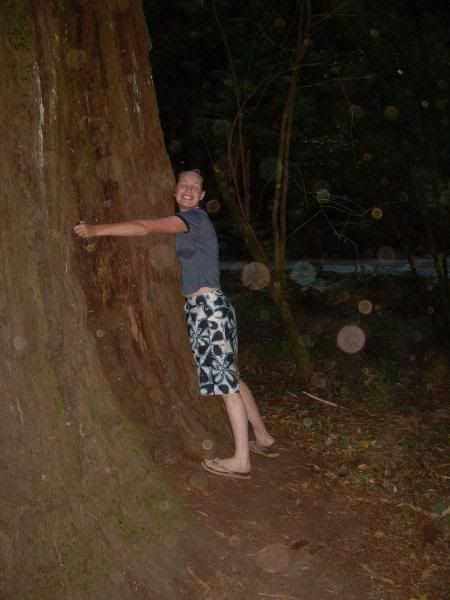
[Image description: A young white woman with brown hair (this blog's author)
wearing white and blue swimming shorts, flip flops and a blue t-shirt
hugs a large redwood tree and smiles broadly with her eyes closed.
Small round specks sort of like bubbles dot the photo
where a light mist had covered the camera lens.]
wearing white and blue swimming shorts, flip flops and a blue t-shirt
hugs a large redwood tree and smiles broadly with her eyes closed.
Small round specks sort of like bubbles dot the photo
where a light mist had covered the camera lens.]
Friday, April 15, 2011
TransFeminist Community - Sex Worker Zine Project
Submission Deadline: May 1, 2011:
"The Sex Worker Zine Project seeks to create a zine showcasing the diversity of sex workers’ experiences of all genders, sexualities, ages, abilities, nationalities, immigration statuses, races, and ethnic backgrounds. International submissions encouraged! This yet to be titled zine will be printed in full cover and will be available for sale with profits supporting the work of SWOP-NYC. All accepted contributors will receive a free copy of the completed zine. This zine is intended to be informal, informational, and accessible."Click the link above for all the details, sounds like a really interesting project!
Thursday, April 14, 2011
This Friday: Rally To Stop The Violence
via « Transgression:
Go to the link for all the info!
"Come out on Friday, April 15th for a Demonstration of Power
Gather at 6pm at 16th St. BART Station
On the evening of Friday, April 1, 2011, a young transgender woman was violently attacked near the 16th and Mission BART station.
Transgender and gender non-conforming people, low-income and homeless people, immigrants, people of color, young people, and women in our neighborhood face daily harassment, violence, and profiling, and have fewer and fewer resources for support. We must work together to stop the violence, heal, and reclaim our neighborhood!"
Go to the link for all the info!
Saturday, April 09, 2011
Doctor Horrible Sequel Moving Along Slowly But Surely
Jed Whedon: Captain Hammer is comedy gold | Los Angeles Times:
This pleases me. And so I thought I would share it with the rest of you! The interview also has a few other interesting related details.
"JP: There’s been talk of a sequel. How far along is the planning for it, if at all?
JW: We have some songs, a rough outline, and no time. Though I have a feeling that when Joss is finished making his massive, expensive superhero movie, he will want nothing more than to make a tiny, cheap superhero movie. With songs."
This pleases me. And so I thought I would share it with the rest of you! The interview also has a few other interesting related details.
Subscribe to:
Posts (Atom)