Showing posts with label LGBTQ2I. Show all posts

Saturday, May 23, 2020

In Memory of Stacey

In loving memory of a real one who I know I quoted multiple times on this blog over the years.  Stacey Park Milbern left us on her 33rd birthday, and none of us were ready.  But she left us a huge legacy.

The #StaceyTaughtUs Syllabus

[caption: a picture of Stacey in her chair, smiling and holding a sign that reads "cherished"]

Sunday, February 05, 2017

As Soon As You Put Me Down I Run Away

When my friend Natasha did Reiki on me a few weeks ago she noted that in my solar plexus chakra there was an intense and deep seated well of shame.  Juxtaposing this, as she worked on this area she got a very clear image of her child running away joyfully with his father chasing him.

Before she was even halfway through describing this image of her child I was welling up with tears.

That child was me.

As soon as I could walk - I was running.  Ironically I detest running now, but as a toddler and child you couldn't stop me.  It was such a common thing that it became a trope of telling childhood stories about me.  In fact while Natasha was recounting this I thought of one image in particular, one that hasn't left me since.

There's a home movie I've seen a few times of my Dad and I in Tahoe, probably in the summer as I don't remember there being snow.  I think he and my Mom are laughing as they film me.  Or maybe they were just laughing when they showed it to me.  Either way, my Dad is holding me and then he puts me down -- and I promptly take off running in the opposite direction of both of them. I'm small, so he is able to keep up with me fairly easily, but it really was remarkable to watch.  If they'd taken their eyes off of me for a second I'd have gone quite a ways before they could have caught me.  But they're clearly used to this.

I was a fearless child.  I gave exactly zero fucks and you couldn't tell me anything.

I don't really remember now what that felt like.

See, remember the other thing that Natasha got from my chakra energy?  Shame. Intense shame.

That child?  Didn't make it past elementary school.

I guess maybe that's normal.  We do a lot of growing in those years.  But by the time I hit junior high school you wouldn't have recognized me in that child.  Hell, you wouldn't have recognized me as that child by the time 4th grade came to an end.

Part of me is glad of this.  That child was starting to grow into someone that was arrogant and self-righteous.  I can still be rather self-righteous, so gods only know what would have happened if I was left unchecked to develop.  Actually, I think I do kind of know -- I probably would have turned out a lot like Jennifer Lawrence.  I have a lot of empathy (and endless critique) for J Law because gods do I see her.  Do I know her.  Us Leos are SO MUCH if we never learn how to be humble.

Another part of me is kinda pissed that things turned out as they did.  Because through bullies and a constantly anxious mother and poor boundaries I turned into someone who takes everything deeply personally, who was shamed repeatedly for who I was, who felt fear of the world around me and closed myself off to so many experiences because of it.  My teenage and adult life have been spent trying to get 1/8th of that fearless confidence back.  And it's only now, in my early 30s, that maybe I'm just starting to get there.

And yeah maybe that kid would have turned into an asshole if left unchecked.  But they weren't one yet.  They were just a little tomboy femme wanting to experience the world, trusting that their parents had their back, that if they fell down they could get back up, that if they bumped their head they'd be ok after a good cry.  She just wanted to express herself fully, to sing, dance, express -- to enjoy life.  And when I think about her I want to cry, for so many reasons but perhaps foremost because I know they were me, but they feel like a stranger.

Can I re-integrate that energy and harness it for good?  Can I experience that fearlessness and joy again?  Can I come to a humility that isn't based in shame and second-guessing my self-knowledge but in compassionate, non-judgmental and honest assessment of my actions?  I hope so.  That's what I'm working on now.

Sunday, August 10, 2014

(Trans)Misogyny on BBC Woman's Hour

Hi guys, it's been a while.  There have been things that I have wanted to write about here and there, but I haven't really had the time to do it.  The continuing genocide in Gaza.  The fifth anniversary of my Aunt's death (and still no trial for her killer).  Police violence.  Changes in how I think about my gender.  Wrinkles.  Sadly in the job I'm in now I don't really have the opportunity to scribble in my notebook as I once did when confronted with thoughts/moments I want to hold on to.  But this week I am here, because I heard something so upsetting that I really couldn't let it go.

I clean houses these days.  For an eco focused company who pays me decent.  It's not a bad gig.  We're allowed to listen to stuff with headphones while we work, and podcasts have been the perfect thing for me.  If I tune out for a second, unlike with an audiobook, I don't really lose my place.  And I don't have the temptation to sing along, like with music (we're not allowed to).  So I've been devouring podcasts!  Mostly these are BBC podcasts, as I find them largely more enjoyable than ones here from the US.  I like hearing perspectives on things from outside my own culture, and the accents, and feeling like I'm learning about another culture sometimes.

The one I've listened to the longest, in fact, for many years now off and on, is "Woman's Hour" on BBC Radio 4.  I looked for USian takes on this idea and really didn't find much.  But this is basically a one hour show, five days a week, that takes a feminist look at current events, primarily in the UK but they do draw stories from around the world.  The topics are as diverse as anyone who has spent time in Women's Studies or the like might expect.

From my perspective this show is not perfect, but it's often interesting.  Much like NPR in the States, Radio 4 seems to be a moderately left-leaning liberal type of environment, and Woman's Hour generally takes a similarly liberal feminist or old school radical feminist perspective on most things.  So, obviously, coming from an anti-kyriarchal feminist perspective I often want to respond with "yeah...but" to their segments.  From the way FGM and hijab are addressed, or the way they interview sex workers and trans women I can tell there is a deep discomfort with things I take for granted as obvious (like that sex work is work and trans women are women, full stop). I don't love this, but I can live with it most days.  Honestly it's often a good reminder about what big F Feminism looks like and values, and clarifies my fundamental differences with them.

But the episode I listened to on Friday was a whole new level.  I actually started crying while I cleaned I was so upset and angry, and I had to turn it off at one point.  Once the episode was over I cleaned in silence for a while just to clear my head.

As soon as I had read the episode description that morning I knew it wasn't going to be good.  "The politics of transgenderism" was the title of one of the segments.  OMG, "transgenderism???"  It was a huge red flag.  That wording is only used by two groups of people: transphobic Radical Feminists, and those who are largely ignorant of what it means to be a trans person and don't know any better yet.  After being in the feminist broadcasting business for a long time (decades, I've gathered) I doubted the latter could be the case here.  I wasn't wrong.  The episode started up and I heard who they had on to discuss their new book during this segment: Sheila Jeffreys.  If you're not familiar with her, like Janice Raymond and Germaine Greer, she is a well known feminist whose work has stigmatized, attacked, denigrated and dehumanized trans people (particularly trans women).

But it was worse than I feared, as the host (Jenni Murray) not only let Jeffreys speak at length without interruption even when she was saying incredibly transphobic things, but then repeatedly interrupted Zowie Davy* when she was finally given the chance to reply.  It was horrible.  It was violent.  And while Natacha at UnCommon Sense has already done an incredible job with her article A detailed response to Sheila Jeffreys on Woman’s Hour, I also feel the need to respond with my thoughts to a few things.  Thank you also to Melissa Tsang who transcribed the segment, which I have used here.

First of all, Jeffreys attacks trans women who, as they begin to express their gender identity, sometimes rely on stereotypical or hyper-feminine expressions of femininity.  Jenni Murray reworded that "accusation" thusly: "Long nails, very painted, long hair, flicked, beautifully made-up. Why is there often an apparent need to become a stereotype of a very feminine woman or a very masculine man?"  I've seen this kind of accusation a lot from feminists.  And I can't remember who said this, though I think perhaps it was Julia Serano, but the concept of a "trans girlhood" seems very relevant here.  It was the simple act of pointing out that when cis** girls begin to mature into women, they begin experimenting with gender roles and different kinds of gender expression.  Usually, we start playing with the images of womanhood that we see around us.  "Around us" can mean in our families, larger communities, or in media (for a few examples).  At some point, at least once or twice, most of us will "try on" a hyper feminine gender presentation: copious makeup, high heels, painted nails, long hair and yes, maybe we will even "flick" it.  As children, this is considered perfectly normal.  We're trying to figure out how what we feel inside corresponds with how we dress and adorn ourselves on the outside.  Trying to figure out the responses we get to different expressions of ourselves and how that makes us feel.  Trying to figure out what we're comfortable with.***  And yet, when a trans woman does this very same thing, she is somehow pathological.

Maybe it is because when many trans women come to this girlhood stage, they are adults.  But tomorrow, I turn 30 years old, and I'm STILL messing with my gender identity!  So why the hell would we assume that a trans woman who has just started expressing her femininity outwardly would have it all figure out right off the bat?  Why wouldn't she do many of the very same things that cis girls do?  From personally knowing, reading about and listening to trans women, it doesn't seem like this stage lasts very long (again, just like with most cis girls).  In fact most, if not all, of the trans women I have known express a very toned down version of outward femininity.  The most hyper feminine women I know in real life are all cis women!  That Jenni Murray and Sheila Jeffreys both seem to believe that trans women stay statically in this place of hyper feminine expression suggests a real ignorance of lived trans womanhood.

Directly after this part of the discussion, Zowie Davy responds brilliantly to this accusation of hyper-femininity by pointing out two things that Murray ignores altogether.  1) That this focusing on "stereotypical" femininity "assumes that femininity is somehow bad" and 2) that it is GENDER CLINICS, aka the gatekeepers of trans people's access to vitally important medications, that absolutely demand very normative gender presentation to take trans people seriously.  This second point has been talked about by trans people in many places; it is the violence of the medical industry on gender variant people, and a real enactment of patriarchal understandings of gender by systems of power.  These are the exact same dynamics that harm cis women in incredibly violent ways within medicine.  Honestly, even the most basic RadFem should take this point very, very seriously because it's the exact kind of patriarchal power over women that they regularly debunk.  And similarly, the first point is one that also falls precisely within the RadFem wheelhouse, reclamation of "the feminine" is something I first came across in radical feminist writing!  Further, the denigration of practices, work and people designated feminine is exactly something Woman's Hour regularly fights against.

Just not when it comes to trans women, apparently.

Finally, the segment ends with the tired, played out fear mongering of "men dressed as women going into toilets and raping (cis) women!"  Look, this is a horrible, violent, demeaning accusation, and one which is totally baseless.  Not because some version of it has never happened, but because people like Jeffreys pretend that trans women are exceptionally apt to raping people, and because this accusation is largely a roundabout kind of victim blaming.  So, first of all, sexual assault happens amongst all genders.  This is a fact.  Queer and straight, cis and trans, women, men and all people in between; sexual assault happens, and the victim and abuser come from every group.  Yes, we know some kinds of violence are gendered, and that those gendered masculine are more often the abuser.  But, and this goes to my second point as well, trans women are THE MOST LIKELY TO BE SEXUALLY ASSAULTED.  Like, statistically, this is a thing we know.  And specifically, trans women of color with a disability are the most likely people to be assaulted.  Because they are on the lowest end of the social hierarchy, the most dehumanized, the most looked down upon.  To turn around and say that trans women, a group that is most likely to be abused, are the ones going around doing all this abusive behavior, is some of the most sick and twisted kind of victim blaming I've seen.  And Jenni Murray not only let this (and all the rest of this abusive tripe) slide, but posed it back to Zowie Davy as though it was some compelling kind of question.

It might be a while before I can bring myself to listen to Woman's Hour again.


* The sacrificial trans woman who was seemingly only asked on so Woman's Hour could claim the segment was "balanced" [which is a BBC requirement for most political stories, I gather].

** I'm going to use the simple binary of cis and trans in this piece, to mean people who ~roughly~ adhere to their assigned gender at birth (cis) and people who don't (trans), but the reality is there is quite a spectrum.

*** Total sidenote but this process is probably a FAR superior example of performativity than the one Butler actually used of drag performance....

Tuesday, December 04, 2012

When Was the Last Time I Did a Round Up of Good Shit to Read?

I don't even know.  But as I was linkspamming the shit out of my Facebook friends (sorry y'all) I thought to myself that really I should be doing this here....  And it's going to be quite the clusterfuck of various areas of my interest and their recent discussion in media, so buckle up.  You're welcome!  :D


Cleveland anarchist bomb plot aided and abetted by the FBI
Rather than target real risks of domestic terror, like neo-Nazis, the FBI entrapment machine demonises anarchists and Muslims
A+ priorities and strategies FBI!  /sarcasm  This is one of the reasons why I am so burned out on anything professing to be "law and order" or "security" matters.  We're creating terrorists so we can catch them...instead of looking at ACTUAL TERRORIST GROUPS like neo-Nazis.  Oh, ok.


The homeless man and the NYPD cop's boots: how a warm tale turns cold
A picture that started as a seasonal heartwarmer has now become a reason not to feel sorry for the homeless as Hillman is painted as a wilful eccentric.
I was really struck by this story and what a great example it is of the demonization of the poor, the way that there is only one "proper" way to BE poor, and the way deviance from that narrative is SOUGHT OUT by people and then used to blame the poor for their situation and thus absolve all others of any complicity or guilt in the system that keeps them there.  I also think this overlaps with my final story....


In solidarity for the respect of Holy Places
In appreciation of the many gestures of solidarity from the Muslim world following the recent desecration of Christian Holy Places, the Auxiliary Bishop of Jerusalem, Bishop William Shomali, visited Al-Aqsa Mosque on Thursday, October 4 where he met Grand Mufti Mohammad Hussein and the grand magistrate of the mosque Abdel Adhim Salhab...The Bishop also assured Muslims the support of the Christian community with respect to their holy places.
People not being assholes.  I felt like I should mix it up a little bit.


Homefulness! A Real Solution to Houselessness
Homefulness, a project of POOR Magazine, is a solution of interdependence, love, and equity-sharing for landless youth, adults, and elders across Pachamama. It is a poor people-led, self-determined, truly green model for housing, art, microbusiness, spirituality, interdependence, self-accountability, caregiving, and community that incorporates the teaching of our elders, ancestors, and spiritual leaders in harmony with Mother Earth. We aim to create permanent and lasting solutions to houselessness for families in poverty who have been displaced, evicted, gentrified, and destabilized out of their indigenous lands and communities.
An IndieGoGo campaign that I would really encourage you to participate in, if you can!


Remember Their Names: In Memory of Kasandra, Cherica & Others
This tragic story pushes to the forefront an important issue in terms of domestic violence and murder. When the murderer is famous, attractive, rich, or charming people don’t want to believe that they are guilty. I don’t pretend to know Jovan Belcher’s heart, motives, or mind set when he fired numerous gunshots into the body of his baby’s mother, and then turned the gun on himself. I don’t know why his only option, in that moment, felt like a desperate one. I don’t know what caused him to murder Kasandra, but what I do know is that it was not Kasandra’s fault. I know that staying out until 1 o’clock in the morning at a concert was not an invitation to die. I know that it doesn’t matter what she wore that night, or what she may have said, or whether or not she may have been intoxicated, or rolled her eyes at him, or called him out of his name, or talked to another guy in passing, she didn’t deserve to die.

Nigeria: Security Forces Open Fire On Protesting Ogoni Community
Armed security forces protecting the interest of the Anglo-Dutch oil and gas major, Shell, on Friday, opened fire on a protesting Ogoni community in the Rivers State axis of Southern Nigeria. The community, Eleme, was protesting against the presence of some Shell officials at the Ebubu Oilfield.

U.S. finalizes $3.4 billion settlement with American Indians
The missing funds at the center of the class-action case involve what are called Individual Indian Money accounts, which are supposed to represent the property of individual Indians. The accounts are held by the United States as trustee.
The lawsuit had accused the government of failing to account for the money, failing to make proper payments, and converting tribal money for the government's own use.
In making the announcement Monday, Obama remembered Cobell for "her honorable work." In 2009, she said that many represented in the class-action lawsuit "subsist in the direst poverty," and that the settlement is "significantly less than the full amount to which the Indians are owed."
This one made me happy, sort of, and also really fucking angry and sad.


The Adoption of Johnny Depp

A video from the 1491s recounting and dramatizing the events of Johnny Depp's adoption by LaDonna Harris of the Comanche nation. Not to be missed.  I'm serious.  Watch this shit.


WUT DUZ TRNAS GENDERE MENA?@??!

An absolutely wonderful infographic on what "Trans" means!!!!!!!  <3


Jonathan Strange & Mr. Norrell Confirmed for BBC Miniseries

If you've read this book, you know why I'm excited!


Who's Afraid of the Qassams?
So stopping Palestinian rockets is not a plausible explanation for Israeli attacks. Indeed, the Israeli leadership – at best – does not care much about such deaths, posturing to the contrary. There’s a reason for that. The Zionist political and intellectual elite makes a lot of cantankerous noises about the rockets falling on southern Israel, usually accompanied by the question, how would you respond if rockets were falling on your head? But less frequently noted is whose heads those rockets are falling upon. Sderot and other southern cities are not merely populated by Jewish Israelis. They are also populated by mostly Mizrahi, usually lower-class, Jewish Israelis, the outcome of a planning regime which puts some populations of Jews in some places and kept other populations of Jews in others. 
Sderot, summoned up so sedulously as the very symbol of Israeli terror and fear due to Hamas’s – mostly ineffectual – rockets was initially a transit camp for Kurdish and Persian Jews. Later, it was populated by Moroccans. And still later, Ethiopians and the darker Jews of the ex-Soviet Caucasus. That was where they were dumped, with the European elites concerned, according to a 1950 Jewish Agency brochure, that the darker Jews might create “quarters of poverty, filth, unemployment, and crime.” Accordingly, there needed to be “a greater effort to settle the immigrants in the countryside.” And so they were. 
[...]And so Tel Aviv, the cosmopolitan, Ashkenazi, cultural core of Israel could remain distant from the front lines of the conflict created by the policies pursued by its economic and political elites, while the cannon fodder on the Israeli periphery would bear their brunt.
So, yeah.  Let's keep this in mind when we're talking about rockets and "retaliation," yeah?


Finally, 'Squatters are not home stealers'
What the squatting dispute boils down to is a split between those who consider private property to be sacred, and those who would prioritise the right to shelter. Few people would happily forfeit a second home to squatters, but nor does it feel morally justifiable for a nation to have an estimated 930,000 empty homes while people sleep on the streets.

This is a really interesting article recounting the situation primarily for squatters in the UK, where a measure (section 144) was recently passed criminalizing them in new if not unprecedented ways, as well as in several other European countries and the United States.

The part I've highlighted here is, for me, one of the common denominators in all of these debates: private property and profit versus the right to shelter and measurements of worth outside of capitalist profit.

Even as I plan to buy a house one day and thus participate more directly than I currently do in the system of private property/profit (through equity), I really think we as communities need to THINK ABOUT what private property means to us, its "sacredness," its use for profit, and our priorities around use of space.  Because it's simply not a question of IF we have an excess of buildings - WE DO - and if people are going to put them to use as homes, gardens, community spaces; isn't that a GOOD THING?

I think it is. And I don't think everything needs to be about PROFIT, or that the use of space is only "good" if PROFIT is made.  But that's the way all this is constructed and POLICED right now.....

This is just one of those things I don't think many people know about, much less question. It's something I didn't know about or question until it was put in my face with the response to building "occupations" over the last couple of years.  So here I am...writing about it.

Sunday, December 02, 2012

Cloud Atlas: Racebending, Genderbending and a Film for Us

Before going to see Cloud Atlas, I knew I few things about it.  I'd seen the trailers, and could see its scope was epic.  From the trailers I also knew it was a film by the Wachowskis, whose movies I generally FUCKING LOVE.  I knew it had been a book.  I knew it practiced racebending (actors of one race made up to look like people of another race/characters of one race played by actors of another).  And I had read two reviews, one referenced and linked to in the other: Cloud Atlas is a Film For Us - It is Our Film, in which the author argues, in part;
This won’t make much sense to a lot of people, but Cloud Atlas is Our Film. And there isn't a trans person in the film. But truly, this is a movie that is as rich and complex and deeply moving as the lives of Trans people, and it carries forward with so many themes that it resonates soundly with transness in a way that it id challenging to describe (sic).

It is a movie for those who love, and for those who are loved. It is a film for those who struggle, who wonder, who hope.
As I was watching the film myself, I couldn't help but agree with this review.

Her words kept ringing in my ears.

But I don't want to start there.  I want to start with what made me profoundly uncomfortable about the movie: the racebending.  Quite frankly, the white men made up to look Asian looked more like Vulcans or Romulans than actual Asian people of any ethnicity.  Like, the makeup people really tried, but it just DIDN'T work.  It was SO distracting.  It was SO awkward.

Similar feelings were conjured when Doona Bae was made up to be white and then a darker Latina, although this was more successful.

Halle Berry I didn't actually even recognize when she was made up as a white woman.

There is a LOT in here about my own perceptions, the perceptions of the other people in the theater, about "passing," about Otherness, and about mixed race features and "beauty" that are beyond the scope of this review (like I'm wishing I was back in school cuz I just keep coming across more things that are so fucking worth analyzing and talking about that I just want to write a huge research paper or something, but I don't want to do all of that right here and now)...

But whether the makeup "worked" or didn't, isn't really the point and isn't what ultimately bothered me about watching white men play at being Asian.  What bothered me was thinking about all the Asian men who could have played these roles, and who ultimately weren't in the movie because of the choice to racebend white men into the roles instead.

At the same time, I do understand the choice to have the same actors portraying many different characters.  I mean, without going into heavy spoilers, this is a lot of what the movie is about.  And not in some white-washed liberal colorblind way (even if in the end whitewashing did occur) but more in the sense of the idea that our souls have been/will be tied into bodies that are different from the ones we have now, and to represent that, they chose to use the same actors, so we can identify these souls visually as they move from body to body throughout time.  From a visual storytelling perspective, this strategy makes sense, and as I said to one of my friends as we discussed our reactions, this is basically the ONLY scenario I can even entertain the idea of racebending of this nature being remotely appropriate/excusable.  It's also a very theatrical choice, as my husband pointed out, which given the Wachowski's grand style of film-making, is also rather appropriate.

That said, I can think of other ways they could have achieved this.  There is a running visual element throughout the film of a distinctive birthmark.  Put that birthmark on anyone, and we could know it was this character reincarnated.  You could then have multiple actors play that role (which they did) and we know to trace them all together.  Obviously the actors, Halle Berry, Hugo Weaving and especially Tom Hanks in particular would have had considerably less fun and demonstrated far fewer of their acting ability in that case, but many more actors, and importantly, many more actors of color, would have had the opportunity to demonstrate THEIR skills instead, and it would not have reinforced Hollywood narratives of the erasure of actors of color and current social narratives of whitewashing.

Note I do not say here "colorblind" narratives, because I absolutely did not take that message away from the film.  The message of the film, in the way it takes us through so many various lives, and shows us their interconnections, is one that does not shy away from difference, nor try to argue we are "all the same;" but that we are connected, that we are not totally separate from each other.  This was one of the messages that I thought was brilliantly done and beautiful to behold.

So yes.  This practice of yellowface made me deeply uncomfortable.  Even as I think it attempted to challenge the idea of the Racial Other, I also think it didn't really succeed.  And that is where I wanted to start my discussion of the film, because it deserves to be put front and center.

Existing alongside this really fucking important discomfort is the fact that I loved this film.  So I cannot over-emphasize my ambivalence here.  What they tried to portray with it was just epic.  There are quotes from the film I want to put in here, and I regret not taking notes as I watched, but I return now to the idea that "this film is for us."  I'm not trans, but I kept thinking about that review at different points in the movie, because, YES.  As someone who has long felt that the status quo/normative culture is one I am forcefully alienated from, YES.  The complexities, and beauties, and tragedies of life, hope and betrayal and greed and love are all in this story instead of some easily digested fantasy, and what ultimately comes out of it all is the need for us to stand up for each other.  To risk that.  To risk telling our truths.  To risk suffering and dying for each other.  That "boundaries are conventions," and conventions must be challenged, pushed at, broken through.

In other words:

REVOLUTION.


Revolution so that we all can survive and REALLY FUCKING LIVE.  In all our difference and splendour and variation and BEAUTY.  And even in our imperfection, making some of the imperfect choices made in its creation perhaps even sort of appropriate.

This movie is so QUEER that it doesn't surprise me that not everyone is "getting" it,* as attested to by the fact that it hasn't been a box office "success," apparently, and that I've heard/read so many saying they were confused by it.  But I don't know.  With all its flaws, it spoke very clearly to me.

And this was why the genderbending didn't make me uncomfortable like the racebending did.  Yes, Hugo Weaving still basically looked like Hugo Weaving, but he didn't play that character as a caricature.  More than that, I was fascinated by this choice of genderbending, given that this is the first movie (IIRC) after Lana Wachowski's transition, the first film she released as Lana publicly.  And in it she chooses a man who has been in like, all but one of the Wachowski's movies, to play a woman.  To play a butch, masculine woman.  Maybe, to play a trans woman.

In fact this is perhaps one of the most stereotypical ways that Hollywood presents trans women, one of the ways it displays it's transmisogyny** and undermines trans feminine identification.  That REALLY, they are not women at all, but "men in dresses."

It would be easy to read this character in that light, and it can't be ignored that this character exists within a movie-making context that is openly hostile to trans people, one that does undermine the perceived validity of trans identification in this manner.  And yet, in her first movie created openly as Lana, she chooses this man, clearly like their favorite actor ever and I'm guessing close friend, to portray this character.  And he does so really, really well.  Nurse Noakes is not played for laughs (although I did hear some VERY uncomfortable and surprised laughter when she first came on screen), and her femininity is not played to a hyper/false-feminine "drag queen" stereotype.  Weaving does affect his voice to make it higher, and this isn't done flawlessly, but it also isn't done hyperbolically.  So to me, this read as a great moment of trust on Lana Wachowski's part.  Of wanting to put characters on screen that don't conform to cisnormativity even as she had to know the hostile environment she would be adding that character to.  And so she chose to person close to her to portray that character, and tried to navigate a razor thin line between challenging the normative and falling into its traps.

It worked for me.

Let me also not ignore here that Weaving was not the only actor to genderbend in this film.  At least one of the woman actors (Xun Zhou, I believe) portrayed a man.  However, this character didn't have as big of a role as Weaving's nurse, and was not as apparently genderbent.  In fact, it wasn't until the end of the movie that I realized she had played that character at all.  And part of my brain screams about what this says about the way in which Asian men are portrayed/perceived as feminine, that this perception arising out of white supremacy's influence on normative gender means it is the Asian actors who have more gender mobility when swapping parts.  It is playing along that edge again, of challenging normativity, and sort of playing with normative perceptions too?  Perhaps in that legacy of Disidentification.  I'm not sure.  I probably won't be sure until I've seen this several more times, but I don't want to ignore any of the inklings of critique bubbling their way to the surface of my mind.

If you have gotten this far, I'm going to guess you've figured out this is a complicated and multi-layered film.  It is.  It is also at times a beautiful film.  Maybe even a transcendent film (a word I don't use lightly as I find it horribly cheesy and pretentious usually).  I do hope you will see it.

It is a film for us.


Footnotes:
*and by that I do not mean "have a problem with any of the totally critique-able parts" but the frequently heard "I have no idea what this movie is about"
**versus "merely" its cissexism in pursuit of "validation" of trans feminine identity through their portrayal by cis woman actors


Addendum:
As for Time relegating this to "the worst movie of the year" all I can say is LOLZ.

Tuesday, November 20, 2012

Transgender Day of Remembrance


Today is the Transgender Day of Remembrance. A time set aside to acknowledge/mourn those we have lost because their bodies and lives as trans people are still so hated in our societies.

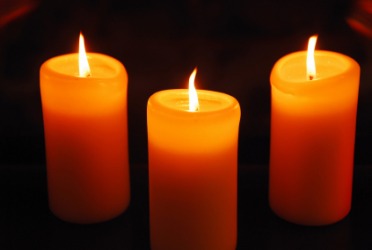
Light a candle, say a prayer, take a moment of silence, whatever it is you do.

And don't forget.


The names of those we have lost this year can be read here:  http://www.transgenderdor.org/memorializing-2012


Brandy Martell
Location: Oakland, California
Cause of Death: Gunshot
Date of Death: April 29th, 2012
Brandy was 37 years old.
Rest in Peace.
Rest in Power.


Saturday, November 03, 2012

Musings: on black bloc and property destruction and violence


This is something I've been thinking about and trying to figure out for a while.  I'm also extremely nervous posting about it, for a lot of reasons, but I am interested in your thoughts so please feel free to respond (as always I reserve the right to moderate your comment if you just act like a jerk).


So I've finally put together why property destruction in demonstrations coupled with black bloc bothers me so much on a personal/emotional/psychic level.

I'm constantly afraid that destructiveness is going to turn on me.  

It's related to the feeling I get when cat-called or when someone I'm arguing with starts to take that anger out physically (hit a wall, etc.) - that as a woman I am NOT safe in this situation.  That I am a target of this aggressive behavior.  

And not just generally as a woman but also individually as someone whose experiences with violent/hypermasculine behavior has been in the context of people wielding power over me; whether teachers, cops or bullies.  Without knowing/trusting the people in the bloc and fully understanding/knowing beforehand what property they are destroying and why, I experience those moments as an unleashing of destructive feeling/emotion/impulse that I KNOW can turn on me and people like me and people not like me but who are also targeted by hatred/violence/aggressive/hypermasculine/-phobic behavior.

As someone who knows intimately the catharsis of slamming a door or punching a wall, as someone who knows well the symbolic power of smashing/burning/destroying something, it's not the theory of the tactic I really have a problem with, but with the experience of it that I've had over the last year in marches, with people I don't know suddenly performing acts around me that I experience as violence (and the looming police threat around us only magnifies that feeling, at times when they haven't been around I have been noticeably less frightened by these actions).  

Black bloc contributes to this because the masks don't just prevent surveillance by cops but by our ability to see each other.  Most of the time, I don't know if I know these people, much less if I trust them.  And I'm just not naive enough to trust on faith that if they're there in this march with me it actually means we're on the "same side."  

I also don't think I'm the only one having a reaction like this in these crowds, which may contribute to why some others also label these actions "violent."  

And PLEASE don't misconstrue this: on a theoretical and even practical level I don't have any problem with BofA having its windows smashed, they and all others like them have practiced violence on many communities, and the cathartic and symbolic power and the message of those smashed windows is, in my view, potentially really valuable.  

But I would also say that I don't think my reaction to these situations is just "a personal problem" or something like that, and that the way I, and others who have experienced destructive impulses/actions that target us, should be taken into account when these things are planned.  Obviously sometimes the smashing of a window is spontaneous and there is only so much you can do about spontaneous actions, but sometimes it's not.  And in those times shouldn't we know and consent to being in this situation BEFORE it starts happening all around us and we're caught in the middle?  If we are all comrades, aren't those of us for whom that might be triggering owed some sort of warning?  

Or do we just deal with it, or not show up?  Because not showing up is almost where I'm at with anti-capitalist marches because of these experiences, and that sucks, because I am anti-capitalist.  

Obviously, it's quite fashionable right now to hate on black bloc* and property destruction, particularly here in the Bay where those tactics have led to some pretty damned divisive conversations...and I don't really want to add to that? (Which is why I've sat on this piece for weeks, actually).  But once I FINALLY figured this out, I also really, really, wanted to write it out and share it and maybe get others thinking about it too, because it seemed important.


*Obviously not all black blocs practice property destruction and not all property destruction is done by a black bloc, this is simply the context in which I have experienced these moments.  The exception being the black bloc on Move-In Day for Occupy Oakland, which I found really inspiring because they took a really awesome militantly defensive tactic of having shields and protecting people by standing between them and the cops and serving as a kind of wall so medics could get to injured people more easily, etc.  That was great.  I would love to see more of that.

Tuesday, September 11, 2012

My Review of "Womanthology: Heroic"


Womanthology: Heroic
Womanthology: Heroic by Bonnie Burton

My rating: 5 of 5 stars

So I want to be really clear, besides just putting stars on it, what I think about this book. I think it's important to acknowledge that on the one hand it's really groundbreaking and beautiful: when have we ever seen woman comic writers gathered together in this way? When have we seen all the advice from professionals breaking down how to do myriad things so that you can make your own? And most of the stories, in my opinion, are also just PLAIN GOOD. I tore through this 300 page treasure trove in a day.  This is the five stars.

BUT, even as all these things are really great, the diversity in the contributors/representations just isn't there on a number of measures. There are really only a handful of contributors of color, and a few more representations of women of color in the stories themselves.  There are no queer relationships at evidence in the stories.  There is only ONE representation of a woman with disabilities. It is BEAUTIFUL and one of my favorite solo pieces, but... there's only one. And it's on the last page of the last section in the five main sections. Ouch. And while there are various gender presentations (ranging across normative femininity to agender, androgynous, femme and butch) in both contributors and represented characters, I saw no evidence of trans women in either contributor (which obviously might not be apparent) or, more importantly, in story subject.

I'm sure the usual reasons will be used to explain this: only so many people got in touch! And I'm sure that's TRUE. But here's the thing... This book got launched through Twitter. So what that means is that the call for submissions was dispersed from person to person. And if this is the demographics that came out, it means this is representative of the circles those passing the tweets on are a part of. I think it would have behooved the editors to do some (more?) outreach beyond their usual circles. OR at the very least, the people who build on this project MUST MUST MUST do that.  We've got to stop making excuses and find a way to change this problem that just keeps coming up and keeps coming up. And that's why I write this. Not to shit on this project, I really loved this book, but to really encourage people to look at it's strengths and it's weaknesses and to address the latter.

View all my reviews

Friday, July 13, 2012

Imagining Social Justice Through Sci-Fi TV: From "Trek" to "Torchwood" (Part Six: The Doctor Who Universe 2)

Previous installments:
Part One: Introduction
Part Two: Reviewing the Literature
Part Three: The Star Trek Universe (part one)
Part Four: The Star Trek Universe (part two)
Part Five: The Doctor Who Universe (part one)


CHAPTER THREE: THE DOCTOR WHO UNIVERSE (part two)

Section Two: Torchwood  Does It All

Within the diegesis of the Doctor Who universe the Torchwood Institute was founded in response to Queen Victoria's interactions with The Doctor and her belief that England (or, as the fictional Queen Victoria puts it:  "the Empire") must have its own defense against the monsters from which The Doctor so often saves the world.  In time, the Torchwood Institute became quite powerful, using scavenged alien technology to create sometimes incredibly destructive weapons and operating branches out of England, Scotland, Wales and India (as well as one which is referred to simply as "missing").  This was a highly nationalistic organization, and it considers The Doctor an enemy of the state.  When Torchwood London is destroyed the Institute becomes decentralized and Torchwood Cardiff (Wales) is reformed by Captain Jack Harkness "in tribute" to The Doctor, instead of in defense of "the Empire.”  The television show Torchwood is based around the Cardiff branch under the leadership of Harkness, that rogue-made-good who so cunningly “disrupted the heteronormative binary” of Doctor Who.[1]
Both the decentralization of and the reformation away from imperialist project undergone by the Torchwood Institute are important elements of Davies’ creation in this series.  As I discussed in the last section, the framework Davies deployed on Doctor Who allowed him to center his stories around characters drawn from marginalized classes in a way that often undermined kyriarchal norms, but the emphasis on the individual did not leave much room for a structural critique of the social elements leading to the marginalization of those characters or their real world counterparts.  The destruction of Torchwood London was a direct consequence of its over-reaching power and the arrogance of its leaders, made all the more possible by its centralized and hierarchal organization, reminiscent of the organization of the British Empire that gave birth to it; thus demonstrating a contempt/critique of kyriarchal (particularly colonial) institutions. 
The decentralization that followed Torchwood London’s downfall scattered power amongst the other locations: facilitating increased local control over conduct and strategy.  In Cardiff, this decentralization means that the local Torchwood’s mission can change drastically, from an organization that treats aliens rather ruthlessly and their technology as resources to be exploited (also tropes of colonialism), into an Earth-side support system and backup for The Doctor (who is no longer branded an enemy) that attempts to protect the Earth from otherworldly dangers (which means always giving the threatening alien/ghost/fairy/etc. a chance to leave peacefully).
In this section I want to talk about the way in which Torchwood utilizes familiar genre tropes to perform a televisual disidentificatory practice, ultimately building to a discussion of its deployment of a structural critique in Children of Earth.  As I have demonstrated with Davies work on Doctor Who, Torchwood (re)deploys the familiar in unfamiliar ways.  By comforting us with familiar (and often problematic) genre/neoliberal tropes Torchwood is able to subvert mainstream ideas about community, partnership, sex and, most importantly in conjunction with the last section: put forward a critique of structural marginalization and oppression.  In addition, Torchwood queers what appears to be an otherwise normative masculine hero (Captain Jack Harkness).  As a useful juxtaposition, I demonstrate how Torchwood is effectively “the anti-24;”[2] in that Torchwood uses similar tropes and themes to dramatically different outcomes.  This juxtaposition came to my attention in Robin Redmon Wright’s essay: “Narratives from Popular Culture: Critical Implications for Adult Education” wherein she makes the claim that “Torchwood is a soap that offers a narrative of political morality that counters that of 24(56), an argument that I build and expand upon as a way to exemplify Davies’ continuing strategy of utilizing/manipulating the normative to undercut the same.  One of the key ways Torchwood displays this counter-morality is by emphasizing the importance of the community (or, specifically, the team). 
Jose Muñoz’ theory of disidentification continues to be instructive and useful in this section because “disidentification is not an apolitical middle ground,” in fact, “its political agenda is clearly indebted to antiassimilationist thought,” although “it departs from antiassimilationist rhetoric for reasons that are both strategic and methodological” (18).  The distinctions Muñoz makes clear here are important to my own argument, which suggests that by embodying common tropes Torchwood is able to create new knowledges through a queer deployment of those tropes.  My work here, too, assumes no “apolitical middle ground” but a working on and with these common tropes to intervene in hegemonic understandings of heroism and difference.  Just as its plots deploy the uncanny to discomfort its viewership (Rawcliffe 102), so too do Torchwood’s “queer moments” disturb the waters of the kyriarchal sexual dichotomy (Sullivan 191).  Indeed, almost everything about Torchwood is queer, if by queer we mean unusual or strange and unsettling of norms.


Friday, July 06, 2012

Imagining Social Justice Through Sci-Fi TV: From "Trek" to "Torchwood" (Part Five: The Doctor Who Universe 1)

Previous installments:
Part One: Introduction
Part Two: Reviewing the Literature
Part Three: The Star Trek Universe (part one)
Part Four: The Star Trek Universe (part two)


CHAPTER THREE: THE DOCTOR WHO UNIVERSE (part one)

“I’ve always been fascinated by the fact that [The Doctor] is a man who always leaves. And when The Doctor does go, it’s the people who are left behind who have to pick up the pieces”
Russel T. Davies (Frankel 56)

In this chapter I move from the United States-based Star Trek of the late 20th century into the new millennium with United Kingdom-based Doctor Who.  As I said in my introduction, this is a document looking at the past as well as toward the future.  The Next Generation of my childhood is clearly in the past, science fiction television has become darker in both aesthetic and in storyline; it has become more morally ambiguous than TNG or even the “grayer” DS9.   But Doctor Who is still on the air, and Torchwood was recently able to produce a fourth season through a collaboration between the BBC and the US network Starz!.  What this means is that this universe is the dominant producer of new science fiction television stories, and thus the narratives produced by it are particularly meaningful for those who, like myself, desire to use them in our work (whether that be using specific episodes as teaching tools, or using them as an opening for critical political discussions within geek communities). 
Doctor Who and Torchwood also serve as good examples for utilizing contemporary hegemonic narratives in a “negotiated” (Chandler) way for fans to question, discuss and resist kyriarchal norms.  As I have stressed throughout, these spaces of imagination are ones wherein we (those engaged with such stories) can begin to envision what other worlds may look like.  While this universe is not, strictly, located in the future, it is a space of alternate presents, which serves a similar purpose in the social imaginary.  The question thus serving as the foundation for the work in this chapter is: “what stories is sci-fi TV imagining today?” and further, “what, then, is the world we are building towards through them?”  To answer these questions I attempt to thoroughly investigate the tropes, narratives and political meta-narratives of Doctor Who and Torchwood.  As with the last chapter, I take the perspective that these shows both reinforce and challenge kyriarchal norms.  In this case, I argue that they do so in a way reminiscent of Muñoz’ disidentification: working both on and against norms.
In the present day, ideologies of neoliberalism (Reaganism in the US, Thatcherism in the UK) have saturated our ways of seeing ourselves and our world.  In the US, the dominant rhetoric holds up ideas like “personal responsibility” and “colorblindness” as the epitome of what makes for a good person/citizen.  Critiques of representation on television are met with the dismissive assignment of “political correctness gone mad” (as if the worst racism/sexism etc., are guilty of is mere impoliteness).  We are supposedly “post-race” and “post-feminism.” But if you are reading this thesis, you probably already know these ideas aren’t accurate.  The work of Angela Davis, Naomi Klein, Lisa Duggan, Cynthia Enloe, Winona LaDuke, Ella Shohat, and the INCITE! Women of Color Against Violence collective, just to name a few, all attest to the various dynamics of continuing systemic oppression that are at work in our prisons, economic systems, militaries/militarism, food systems, foreign policy and even within social justice activist circles. 
It is within the context of these dominant neoliberal narratives that science fiction television of today is being written, and changes in representation from Trek to Torchwood reflect that, as we will see below.  During the years in question in this work, Doctor Who aired on BBC 1 (the BBC’s flagship/most popular channel) in the UK, CBC (Canada’s domestic version of the BBC, both are public access channels) in Canada and the Sci-Fi Channel (a cable channel) starting with season two in the US.  Torchwood aired on BBC 3 for its first season, BBC 2 for its second and BBC 1 for Children of Earth, with ratings going up each season.  In the US, Torchwood was “BBC America’s biggest hit” during these years (Levin, Bowles and Gardner), with its latest season airing on Starz.  Additional viewership came via internet services like Netflix (which offers all of the seasons since 2005 after they have finished airing) that offer memberships for DVD and internet based viewing, and torrent (illegal download) services such as The Pirate Bay.  Through these various means, Doctor Who has achieved a loyal viewership and active fanbase pulling membership from around the world. 
It is this incarnation that I will engage with in this chapter because this project is about looking to both the past and the future, and given its popularity with both viewers and the company that produces it, Doctor Who and Torchwood are the future (or at least the present) of sci-fi television.  I am limiting the discussion solely to the Davies years to maintain symmetry with the Gene Roddenberry-headed Star Trek/Star Trek: TNG and because Davies has expressed consciousness of the politics of his work (Davies).  While political narratives are present whether producers self-consciously include them or not, this figure of the politically conscious man behind the show examined provides a neat theoretical parallel between the franchises.  
The first section of this chapter will tackle the political narratives of the “new” Doctor Who, that is, Doctor Who circa 2005.  I will argue here that the diegetic parameters of Davies’ stories necessitate a re-centering of these stories onto The Doctor’s companions.  Through this re-centering the implicit messages of these stories changes dramatically, moving away from the tokenistic representations of marginalized bodies on Trek to fully actualized hero-characters on Doctor Who; culminating in a meta-narrative that it is the everyday person (those from marginalized communities and not those from powerful sectors of society) who change/save the world.  Finally, I consider the limitations of this model: that although in making every day people his heroes, Davies’ stories are able to, at their best, resist ideologies of racism, classism, sexism and ageism, they also feed into a neoliberal logic that ignores the power of structures and institutions.
In the second section I examine the way in which Torchwood deploys similar story-telling techniques as Doctor Who to perform a disidentificatory practice and queer an otherwise normative masculine hero (Captain Jack Harkness).  Through this queering of the normative hero and genre tropes, I argue Torchwood can be conceived of as the anti-24, 24 being a US-based drama whose narratives uniformly defend the neoliberal/neoconservative-nationalist-kyriarchal order.  Finally, I contend that the powerful structural critique lacking on Doctor Who is deployed on Torchwood: Children of Earth.  In all these ways, I argue Davies manages to utilize neoliberal tropes in a way that critiques and partially resists the neoliberal kyriarchal order.

Thursday, December 22, 2011

Mattilda's Call For Submissions For Anthology on Queering #OWS

From Nobody Passes
Please forward far and wide…

WE ARE NOT JUST THE 99%:
Queering the Occupy Movement, Reimagining Resistance
Edited by Mattilda Bernstein Sycamore

*CALL FOR SUBMISSIONS*

Ignited by the Arab Spring, uprisings in Greece and Spain, and protests in Wisconsin, Occupy Wall Street has brought corporate greed and structural inequality into the spotlight while claiming public space and refusing hierarchical models of resistance. "We are the 99%," the central slogan of the Occupy movement, has been crucial in rallying mass support. And yet, this slogan invokes a vision of sameness that stands in stark contrast to a queer analysis that foregrounds, cultivates, and nurtures difference. From Mortville, the queer camp at Occupy Baltimore, to the Feminists and Queers Against Capitalism bloc at the Oakland general strike, queers are playing central roles in Occupy spaces. But, what would it mean to bring a queer analysis to the forefront, going beyond the politics of inclusion to question the very terms of the debate?

For the first time in decades, perhaps there's a possibility for a mass movement demanding radical social change in the US. Still, most Occupy spaces remain straight, white, and male-dominated: how do we prevent the power imbalances intrinsic to previous movements? What about accountability within the 99%? How have Occupy spaces addressed (and failed to address) homophobia, transphobia, misogyny, racism, ableism, imperialism/patriotism, police brutality, anti-homeless territorialism, sexual assault, and other issues of structural, personal, and intimate violence? As struggles emerge to confront the colonial rhetoric of “occupying” indigenous land (and to address this history), what can a queer analysis bring to this challenge? What do queer struggles have to learn from Occupy/Decolonize movements, and what can Occupy/Decolonize movements learn from queer struggles?

I'm interested in missives from queers involved in Occupy/Decolonize movements, as well as from those veering between skeptical and inspired. I would love to hear about queer challenges within Occupy encampments large and small, across the country and around the world. Bring me your explosive analysis, your rants, your manifestoes, your journal entries, your rage and rigor and hope and heartbreak. In addition to written nonfiction work, I'm also interested in art, photography, posters, flyers, and other forms of visual documentation queering the Occupy movement – its goals and aspirations, its impact, its perils and possibilities.

Mattilda Bernstein Sycamore is the editor of five nonfiction anthologies, most recently Why Are Faggots So Afraid of Faggots?: Flaming Challenges to Masculinity, Objectification, and the Desire to Conform (AK Press 2012), and the author of two novels, most recently So Many Ways to Sleep Badly (City Lights 2008). More info on Mattilda at mattildabernsteinsycamore.com.

Please send essays or written materials of up to 5000 words, as Word or text file attachments only, to nobodypasses@gmail.com. Include a brief bio. Please send a query before submitting visual work. The deadline is March 20, 2012, although the earlier the better. Any questions, send them my way!
Sounds like a book I will be very interested to read!

Friday, December 09, 2011

Review: Shadoweyes, Volume One


Shadoweyes, Volume One
Shadoweyes, Volume One by Ross Campbell

My rating: 5 of 5 stars

I really enjoyed this graphic novel, the content was interesting, the story was intriguing and the characters were amazing. Not to do any spoilers but this text deals with several social issues and oppressed identities in ways I rarely see and I was impressed. Yes, the story was quick, but it seemed kinda par for the course with comics to me, and totally met my expectations. Can't wait to read Vol. 2!

View all my reviews

Sunday, November 20, 2011

Transgender Day of Remembrance


(If anyone knows who took this photo I would love to know, a friend posted it on Facebook but they didn't know where it came from originally)

The list of the dead

Candles are lit for you tonight, sisters.

Sunday, September 04, 2011

People, Not Places

People Not Places (Detroit, New York, Palestine, 12 min)
Directed by Iqaa The Olivetone
Score by Vaughan T (LABTECHS)
Produced by EMERGENCE and Palestine Education Project

EMERGENCEtravel.net
EMERGENCEmedia.org
MP3: tinyurl.com/​696jl9
lyrics & notes: emergencetravel.net/​lyrics#people_not_places

This docu-music-video is based on the song of the same name by Invincible featuring Abeer and Suhell Nafar (DAM). Invincible plays two characters in the video: a Birthright Israel tour recruiter, styled as a used car salesman; and herself, subverting the recruiter’s mission by exposing the buried Palestinian significance of each location in the tour.

Invincible exposes the process of historic and continued colonization of Palestine as being even deeper than land seizure and ethnic cleansing, but one that attempts to erase the indigenous language, culture, and memory of Palestinians.

Intertwined with the music video are interviews that expose how Zionist claims to a Jewish “birthright” to Palestine have come at the expense of the Palestinian Right of Return to their indigenous land. These interviews show how the Right of Return of Palestinians is interconnected with the resistance of occupied and displaced refugee communities globally, from Turtle Island to Puerto Rico and beyond.

Please watch.

Sunday, July 10, 2011

Is 'The Bay' An Island?

How Fetishizing the Bay Area Hurts Our Movements and Communities (an excerpt):

"Queers use markers as code to communicate with each other. White queers sometimes use markers that are appropriated in problematic ways. In this case, the bright colors and spandex wasn’t troublesome in and of itself—it was that this homogenous group of white people (a dominant group) was occupying public space in a big way and in direct relationship to the violence of gentrification in that neighborhood. The answer isn’t to not ever wear spandex or be fabulous. I don’t know what the answer is, but I’m excited, as white queers, to find solutions that aren’t punitive while we figure out how to create markers and communicate with each other in ways that don’t harm or alienate anyone."

"I want to think through the ways people (and sometimes organizations) speak about “The Bay” in a way that flattens and makes organizing cultures and frames of reference inaccessible for a lot of people, especially people who grew up around here."

"For young white people, Oakland is a cool place to live. Berkeley is not. I’ve lived in Berkeley and know a good crew of folks who do. When young white people tell other young white people we live in Oakland, we are affirmed and admired. When folks say they live in Berkeley, it’s not so cool, and sometimes comes with a smirk or raised eyebrow. What in our imagination makes Oakland cool? The mystique of danger? Gentrification? The political history? Brown people? What does this say about who we really think lives where?"

The above are only excerpts of a larger flow and argument, please click the link at the top to read Savannah's whole work and to consider the conversation she is trying to begin.

And while this is specific to the Bay, I doubt we're the only area where these or similar politics are playing out.

Speaking only for myself, she's touching on some issues here that have stuck in my mind as a Bay Area "native" for years; things I have yet to resolve for myself and would be really interested in working with others to figure out.

Wednesday, May 18, 2011

“Who’s the Queer?”


Queer Themes and Neoliberalism in the BBC’s Torchwood

“Entertaining, engaging stories become popular. They become narratives that shape our cultures…embedded in our daily existence…they become our lived reality”  
– Robin Wright [1]

This essay is an exploration of the UK-based television series Torchwood and its unique productions of cultural knowledge.  The central questions of that exploration are: first, how does this show queer science fiction television/the crime procedural, and second, what does that queering produce?  In short, I argue that by utilizing familiar genre tropes (such as the “conflicted hero” and “good versus evil” story lines) Torchwood performs a televisual disidentificatory practice, deploying the familiar in unfamiliar ways and queering an otherwise normative masculine hero (Captain Jack Harkness).  By comforting us with these familiar tropes Torchwood is able to infiltrate our minds with queer ideas about partnership, sex and, importantly the nature of the world around us.  As a useful and productive juxtaposition to illuminate how these ideas work in practice, I demonstrate how Torchwood is effectively the anti-24 (24 being an immensely popular and in some ways thematically similar drama from the United States); using similar tropes and themes to dramatically different outcomes. 

My methodology is one of bridging cultural studies and feminist, queer and critical race theory in an examination of one particular contemporary popular culture item so as to deconstruct and analyze the various messages and ideas propagated by it.  Primarily, I utilize Jose Muñoz’ theory of disidentification as the foundation for my argument.  While Muñoz conceptualized his theory with live performance art in mind, the idea of inhabiting as well as contesting an image thereby producing a different and new image or concept can, in my view, be applied easily to almost any visual medium.  In addition, this theory is instructive and useful to my project because “disidentification is not an apolitical middle ground,” in fact, “its political agenda is clearly indebted to antiassimilationist thought,” although “it departs from antiassimilationist rhetoric for reasons that are both strategic and methodological” (Muñoz 18).  The distinctions Muñoz makes clear here are important to my own argument, which suggests that in embodying common tropes Torchwood is able to create new knowledges through a queer deployment of those tropes.  Just as its plots deploy the uncanny to frighten or discomfort its viewership (Rawcliffe 102), so too its “queer moments” disturb the waters of the desired sexual dichotomy (Sullivan 191).

I choose this path of argument because it seems to me that it is in the uncomfortable borderlands of the cultural productions these disciplines study where knowledge is being produced in the television viewership every week.  In undertaking this particular work, I take seriously Nikki Sullivan’s assertion that “queering popular culture…involves critically engaging with cultural artefacts in order to explore the ways in which meaning and identity is (inter)textually (re)produced” (190).  I understand both the queer themes of Torchwood and my current explorations of themes, both explicitly queer and not, as operating within this ideological construction of “queering popular culture.”  I choose to engage in this project, centered around a popular culture (and for much of its life, subcultural) text, because of a personal and observed belief in the power of stories in shaping the world we live in. 

Indeed, the power of fictional stories in the development of people’s beliefs is shared by Robin Wright, documents in her work the ways in which adult education teachers have been able to use fiction to challenge hegemonic cultural perspectives, as well as the way the television we watch aids in perpetuating hegemonic political discourse (Wright).  This belief is also reinforced by scientific research, for example, one such study “concluded that the use of fiction…to introduce a socio-scientific issue in the classroom stimulates students to develop their opinion-forming skills” (Knippelsab, Severiensa and Klopa).  Although this is hardly an exhaustive list in corroboration of my previously articulated assertion, these texts combined with the way in which we use stories and folk tales in the education of children and in everyday relations with each other suggest to a satisfactory extent the marked significance of stories.  Thus, my stakes in this work is high, as like Wright, I see in the stories we tell the potential for authoring and disseminating “alternative scripts for human interactions the promote liberty, equality, intellectual growth and community” (Wright 50).

Friday, April 15, 2011

TransFeminist Community - Sex Worker Zine Project

Submission Deadline: May 1, 2011:
"The Sex Worker Zine Project seeks to create a zine showcasing the diversity of sex workers’ experiences of all genders, sexualities, ages, abilities, nationalities, immigration statuses, races, and ethnic backgrounds. International submissions encouraged! This yet to be titled zine will be printed in full cover and will be available for sale with profits supporting the work of SWOP-NYC. All accepted contributors will receive a free copy of the completed zine. This zine is intended to be informal, informational, and accessible."
Click the link above for all the details, sounds like a really interesting project!

Friday, April 01, 2011

We Are One: April 4 Day of Action

From the site: "On April 4, 1968, Dr. Martin Luther King Jr. was assassinated in Memphis, where he had gone to stand with sanitation workers demanding their dream: The right to bargain collectively for a voice at work and a better life. The workers were trying to form a union with AFSCME.

Beginning with worship services over the April 1 weekend, and continuing through the week of April 4, unions, people of faith, civil and human rights activists, students and other progressive allies will host a range of community- and workplace-focused actions.

Join us in solidarity with working people in Wisconsin, Ohio, Indiana and dozens of other states where well-funded, right-wing corporate politicians are trying to take away the rights Dr. King gave his life for: the freedom to bargain, to vote, to afford a college education and justice for all workers, immigrant and native-born. It’s a day to show movement. Teach-ins. Vigils. Faith events. A day to be creative, but clear:


See the link for your local action!!

List of Bay Area events current as of April 1 below the cut:

Wednesday, March 02, 2011

Bay Area Event - Girl Talk: A Trans & Cis Woman Dialogue


Thursday, March 24th, 2011
7:00pm – 10:00pm
San Francisco LGBT Community Center – Ceremonial Room
1800 Market Street between Octavia & Laguna 
Tickets: $12-$20 (no one turned away!)
Please go to this link for ALL the information!

Sunday, January 02, 2011

One Example of Many of Transphobic Feminism

via Yet Another Kiri Bloggish Thing:
"In the early eighties, there was a report, written for the US Government, called Technology on the Social and Ethical Aspects of Transsexual Surgery. This report argued that transition-related treatments were medically unnecessary. As a result, consideration of federal and state aid for trans people was dropped, and private insurance companies quickly followed suit, disingenuously expanding the definition of “transition-related” to include absolutely anything that could even conjecturally be related to hormone treatments, including various types of cancer. Trans people have died as a result.
I wonder how many people know who was responsible for that report, who it was that convinced the US government (and, indirectly, insurance companies) that helping trans people wasn’t important. You’d probably think it was some fundiegelical Republican, right?
Nope. It was Janice Raymond."
[emphasis added]